
Table of Contents
Introduction
Strength training and weightlifting are essential components of a well-rounded fitness routine. Whether your goal is to build muscle, increase strength, or improve overall health, incorporating the right exercises, nutrition, and recovery strategies can transform your body and performance. In this guide, we’ll cover the fundamentals of strength training, popular exercises like the barbell bench press, back hyperextension, and calisthenics, and practical tips to design your own training program.
What Is Strength Training?
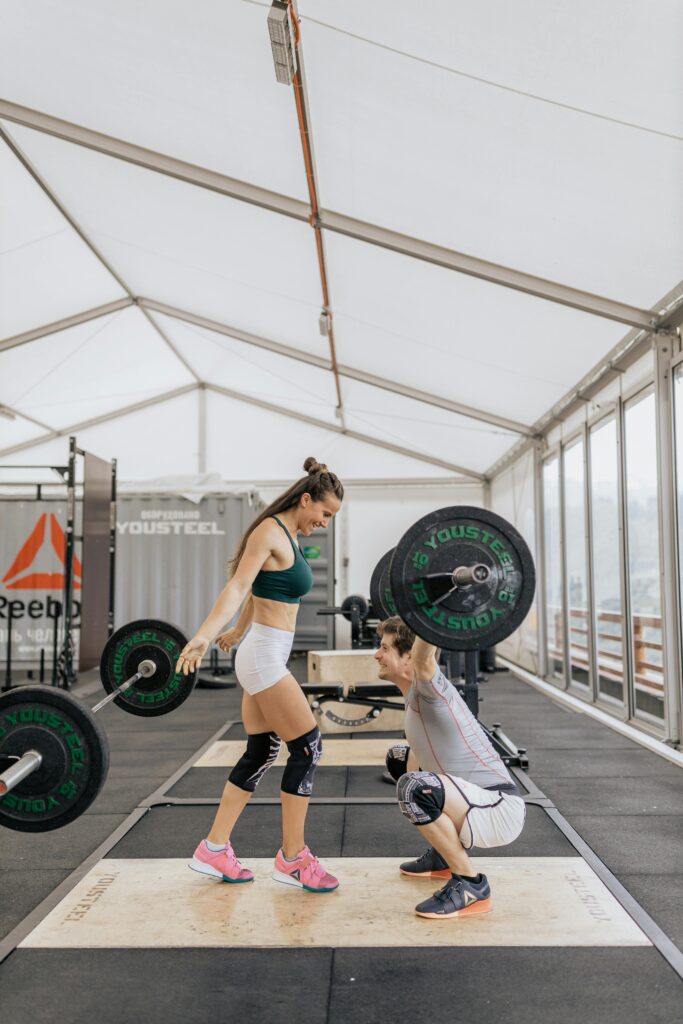
Strength training, or resistance training, is the process of working muscles against weight or resistance to enhance strength, endurance, and all-around fitness. In contrast to cardio exercises aimed at heart health and endurance, strength training aims at developing muscles and power.
Benefits of Strength Training
Muscle Growth – Resistance training causes hypertrophy, making muscles larger and tauter.
Fat Loss – Strength training boosts metabolism, leading to fat burning even at rest.
Bone Health – Strengthens bones, lowering the risk of osteoporosis.
Functional Strength – Assists with daily activities, enhancing posture and movement.
Mental Health – Brightens mood, decreases stress, and increases self-confidence.
Adding strength training to your regimen can significantly enhance your overall well-being, from physical function to mental toughness.
Important Equipment for Weightlifting
In order to develop a strong strength training program, you’ll have access to certain equipment. Here’s the breakdown:

Barbell Bench and Barbell Bench Press
The barbell bench press is a staple of upper-body strength training. Done on an incline, decline, or flat barbell bench, this exercise works most the chest, shoulders, and triceps.
How to Do the Barbell Bench Press
- Lie flat on the bench with feet firmly on floor.
- Grip the bar slightly wider than shoulder-width.
- Slowly lower the bar to your chest, with elbows at a 45-degree angle.
- Push the bar back to the starting position, extending the arms fully.
Tips for Success:
- Don’t arch your back as much as possible.
- Maintain a controlled movement to avoid shoulder injury.
- Use a spotter during heavy lifts.
- Back Hyperextension Bench
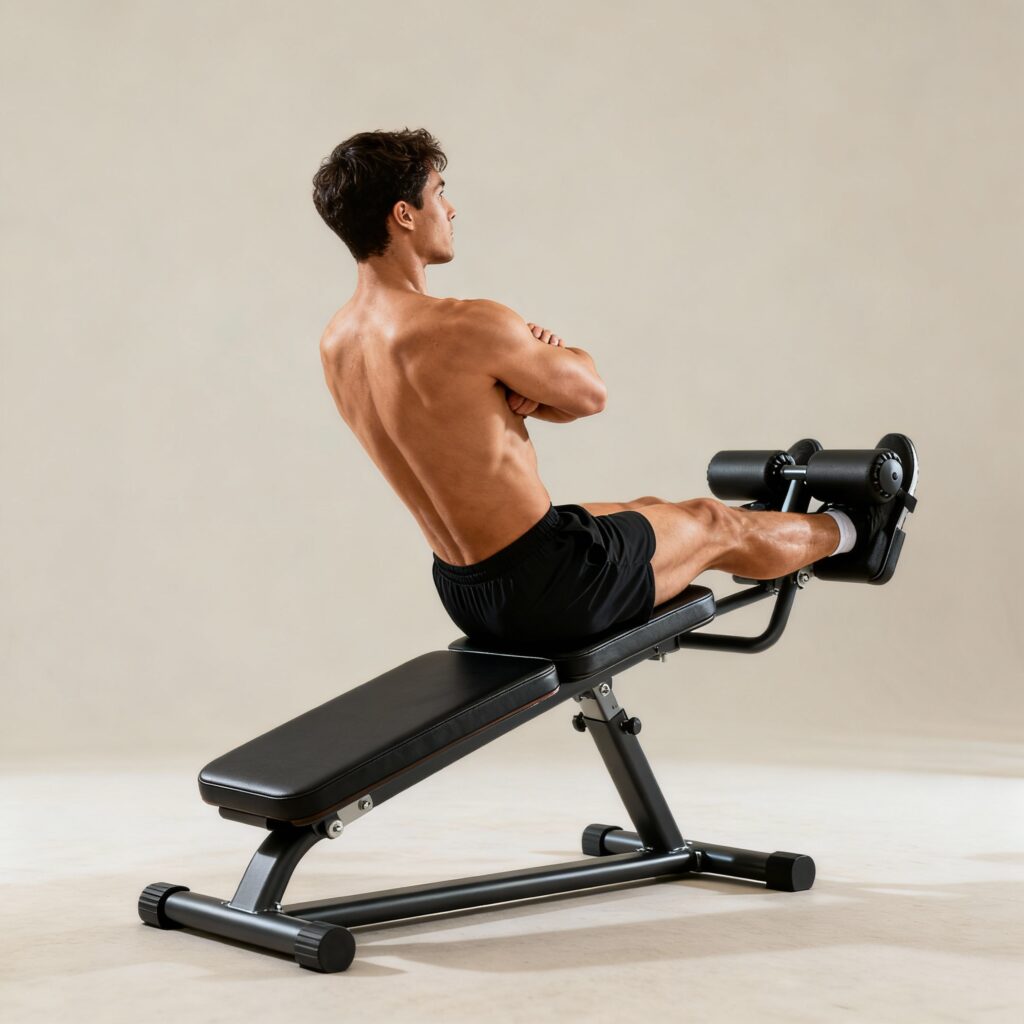
The lower back, glutes, and hamstrings are targeted by the back hyperextension. The development of these muscles enhances posture, avoids injury, and improves lifting performance.
How to Perform Back Hyperextension
- Stand over the hyperextension bench with your hips aligned over the pad.
- Cross arms over chest or put hands on back of head.
- Lower upper body down slowly toward ground.
- Use back muscles and come back to the original position.
Calisthenics Equipment
Calisthenics emphasizes bodyweight exercises such as push-ups, pull-ups, dips, and planks. Very little equipment is required, making it ideal for beginners or those not fully equipped with a gym setup.

Advantages of Calisthenics:
Increases functional strength.
- Strengthens endurance.
- Decreases injury risk by stabilizing the joints.
Strength Training Exercises
Upper Body Strength
Barbell Bench Press – Develops chest, shoulders, and triceps.
Overhead Press – Develops shoulders and upper back.
Pull-Ups / Chin-Ups – Builds lats, biceps, and grip strength.
Lower Body Strength
Squats – Develop quads, hamstrings, glutes, and calves.
Deadlifts – Develop the entire posterior chain, including lower back, glutes, and hamstrings.
Lunges – Enhance balance and unilateral leg strength.
Core and Back Strength
Back Hyperextension – Develops lower back and glutes.
Planks – Develops core stability.
Hanging Leg Raises – Works on lower abs and hip flexors.
Designing a Strength Training Program
Developing a program involves thoughtful planning in order to balance strength, hypertrophy, and recovery.
Weekly Plan
Day 1: Chest & Triceps – Barbell Bench Press, Dumbbell Fly, Push-Ups
Day 2: Back & Biceps – Pull-Ups, Barbell Rows, Back Hyperextension
Day 3: Legs – Squats, Deadlifts, Lunges
Day 4: Rest or Active Recovery – Stretching, Light Cardio, or Calisthenics
Day 5: Full Body – Barbell Bench Press, Overhead Press, Planks
Sets and Reps
- Strength: 4–6 reps, 3–5 sets, heavy weight
- Hypertrophy: 8–12 reps, 3–4 sets, moderate weight
- Endurance: 15–20 reps, 2–3 sets, light weight
- Rest Periods
- Strength: 2–3 minutes
- Hypertrophy: 60–90 seconds
- Endurance: 30–60 seconds
Nutrition for Strength Training
Nutrition is significant in the development of muscle mass and facilitating recovery.
Macronutrients
Protein: 1.2–2.0 g per kg body weight; foods include chicken, eggs, and lentils.
Carbohydrates: Power workouts and restore glycogen; foods include rice, oats, and fruits.
Fats: Facilitate hormone production; sources are nuts, olive oil, and avocado.
Optional Supplements
- Post-workout whey protein for recovery
- Creatine to increase strength and power
- BCAAs to repair muscles
Recovery and Injury Prevention
Injury can result from overtraining. Adequate recovery assures long-term progress.
Rest Days: Let muscles recover and grow.
Sleep: 7–9 hours for best recovery.
Stretching: Loosens stiffness, increases flexibility.
Foam Rolling: Relieves muscle tension.
Monitoring Progress and Motivation
- Maintain a workout log to monitor lifts, reps, and sets.
- Use body measurements and progress photos.
- Set realistic goals for exercises such as barbell bench press.
- Get motivated with workout buddies, music playlists, and challenges.

Role of Mind-Muscle Connection in Strength Training
Perhaps one of the most underappreciated features of strength training is the mind-muscle connection (MMC). What this refers to is that you are consciously thinking about the muscle you are trying to work on with a given exercise.
For instance, when you perform bicep curls, rather than merely lifting the weight up and down, you need to focus on contracting and extending the biceps. Experiments indicate that players who establish a strong mind-muscle link are able to create higher muscle activation than those who concentrate on merely lifting heavy loads.
Benefits of MMC
Isolate muscles being trained more effectively.
Better form and decreased risk of injury.
Influences controlled motion rather than hurrying through repetitions.
Change block type or style
Move Paragraph block from position 76 up to position 75
Move Paragraph block from position 76 down to position 77
Change text alignment
Breathing Techniques Importance
Breathing in the gym is usually overlooked, but it can totally transform your performance. Correct breathing increases oxygenation, stabilizes the core, and enhances endurance.
- Correct Breathing during Weightlifting
- Breathe in during the eccentric phase.
- Breathe out during the concentric phase.
For heavy weights such as squats and deadlifts, weightlifters tend to employ the Valsalva maneuver (holding breath to generate intra-abdominal pressure), which stabilizes the spine and maintains it against heavy load.
Monitoring Progress and Maintaining a Training Log
Strength training is not merely weight lifting; it’s about progressive overload and monitoring performance. A workout log or journal allows you to document sets, reps, and weights. After some time, you can notice patterns and make improvements.
Advantages of a Training Log
- Makes you accountable.
- Facilitates tracking personal records (PRs).
- Avoids plateaus by determining what works and what doesn’t.
- Motivates you by providing visual evidence of progress.

Sleep and Recovery – The Overlooked Factors
Muscles aren’t made in the gym; they’re made while you’re sleeping. Recovery is essential to muscle building and strength. Without rest, the body can’t heal damaged muscle fibers.
Recovery Tips
- Strive for 7–9 hours of good quality sleep nightly.
- Have rest days in your schedule.
- Employ recovery techniques such as stretching, foam rolling, or light yoga.
- Drink water, as dehydration hinders recovery.
- Debunking Common Strength Training Myths
There are a number of myths that prevent beginners from achieving their potential.
Myth 1: “Lifting heavy will make women bulky.”
Reality: Women have lower testosterone levels, therefore weightlifting will make them toned, not bulky.
Myth 2: “Cardio kills gains.”
Reality: Moderate cardio actually enhances endurance and recovery without compromising muscle growth.
Myth 3: “More reps always equal more results.
Reality: Depending on the objective. Low weights with high reps develop strength, but more reps enhance endurance.
Nutrition’s Role in Strength Training
Regardless of how diligent you are with training, without nutrition, advancement will be minimal.
Key Principles of Nutrition
Protein: Used to repair muscle (chicken, fish, eggs, lentils).
Carbohydrates: Supply energy for high-intensity exercise (rice, oats, fruits).
Healthy fats: Aid hormones and recovery (nuts, olive oil, avocado).
Supplements (optional): Creatine, whey protein, and BCAAs can boost performance.

Mental Discipline and Motivation
Strength training is as much mental as it is physical—it’s a challenge of mental discipline. Following a routine takes consistency, patience, and self-motivation.
How to Stay Motivated
- Set SMART goals (Specific, Measurable, Achievable, Relevant, Time-bound).
- Train with a workout buddy for accountability.
- Celebrate small victories, such as lifting heavier weight or doing additional reps.
- Visualize progress and recall why you began.

Injury Prevention Safety Measures
Injuries occur frequently if lifters neglect form or push too aggressively.
Safety Tips
- Warming up before lifting is a must.
- Master form first before adding weight.
- Wear safety gear such as lifting belts, wrist wraps, or knee sleeves if necessary.
- Never ego-lift; select weights you can handle.
Periodization – Smarter Training for Optimal Gains
Rather than training the same each week, professional athletes employ periodization, or structured variation of training intensity and volume.
Types of Periodization
Linear: Increasing weights steadily over weeks.
Undulating: Alternating heavy, moderate, and light sessions within a week.
Block training: Training one quality (strength, power, endurance) for several weeks before progressing to the next.
Future of Strength Training – Tech & Trends
Contemporary strength training is changing with technology. Wearable fitness trackers, smart gym equipment, and AI-based fitness apps are simplifying the process of personalizing training. Virtual coaching is also gaining popularity, providing access to professional guidance without physical presence.
Frequently Asked Questions (FAQs)
Q 1: How many barbell bench press reps do I need to do?
A: 4–6 reps for strength, 8–12 reps for muscle growth.
Q 2: Can weightlifting be replaced with calisthenics?
A: Calisthenics enhances functional strength but does not necessarily produce the same muscle overload as heavy weightlifting.
Q3: How frequently should I perform back hyperextensions?
A: 2–3 times a week, with 3 sets of 10–15 reps, based on your program.
Q 4: How many sets and reps should I do of barbell bench press?
Answer: The number of reps and sets will vary based on what you are trying to achieve in training:
For strength: Do 4–6 reps per set with 3–5 sets, using heavier weights that you struggle with. Use slow, controlled movements and full range of motion.
For hypertrophy (muscle growth): Do 8–12 reps per set, 3–4 sets. Moderate weights are best; they enable you to keep your body in good form but still produce maximal tension within the muscle.
For muscular endurance: Do 15–20 reps per set, 2–3 sets with lighter weights. This builds muscular endurance instead of size.
Do not forget to rest 2–3 minutes for strength, 60–90 seconds for hypertrophy, and 30–60 seconds for endurance between sets. Warm up with light sets first before lifting heavy.
Q 5: Back hyperextension exercises should be done how often?
Answer: Back hyperextensions are important for building your lower back, glutes, and hamstrings. Novice lifters can begin 2–3 times per week, doing 3 sets of 10–15 reps. Advanced lifters can include them 3–4 times per week based on the overall program intensity.
Always maintain slow, controlled movements. Don’t overextend your back to avoid injury. Use hyperextensions in combination with other core exercises, such as planks and hanging leg raises, for a comprehensive core workout.
Q 6: Can calisthenics substitute weightlifting for strength?
Answer: Calisthenics works perfectly well to develop functional strength, flexibility, and stamina, particularly for beginners or those with no access to a gym. Push-ups, pull-ups, dips, and squats are strength-developing exercises using your body weight.
Nonetheless, calisthenics by itself might not be enough to deliver progressive overload for optimal hypertrophy or heavy strength gains. Mixing calisthenics with weightlifting exercises such as the barbell bench press or squats will provide you with the best of both worlds.
Q 7: What is progressive overload, and why is it necessary?
Answer: Progressive overload is the practice of increasing stress on your muscles progressively to cause growth and increased strength. This can be achieved by:
- Ingesting weight
- Increasing sets or reps
- Reducing rest intervals
- Altering exercise tempo or range of motion
Without progressive overload, muscles get used to the same routine, and strength gains or growth level off. For instance, if you bench press 50 kg for 10 reps for a few weeks, your muscles will eventually adapt, and raising the weight or reps is what you need to make progress
Q 8; How do I help injuries when lifting weights?
Answer : Precluding injury is consummate in any strength training authority. Some top advice is
Proper Form Always use proper posture and movement mechanics. Do n’t arch your back too important on barbell bench presses.
Warm-Up Use dynamic stretching and light sets to warm muscles and joints.
Gradational Progression Do n’t lift too heavy too beforehand. Gradationally increase weights.
Rest and Recovery Overtraining results in injuries. Have applicable rest days and sleep.
hear to Your Body Pain is a warning sign. Stop any movement that produces discomfort and see a coach if necessary.
Q 9: How do I know if I’m lifting too heavy?
Answer: Signs you might be lifting too heavy are
- Poor form or out- of- control movements
- Difficulty doing your target reps
- Sharp or long- lasting common pain
- Fatigue that will not go down with rest
Always favor form over weight. It’s preferable to lift lighter with good form than to threat injury using heavier weights.
Q 10: What are the most effective exercises for overall muscle development?
Answer: For balanced hypertrophy, concentrate on emulsion movements
- Barbell Bench Press casket, shoulders, triceps
- Squats Closes, hamstrings, glutes
- Deadlifts Lower back, hamstrings, glutes
- Pull- Ups Chin- Ups Lats, biceps, shoulders
- Outflow Press Shoulders, triceps
- Back Hyperextension Lower back and glutes
Add appurtenant exercises to hit the lower muscles. Brace with calisthenics for functional strength and abidance.
Q 11 : What’s the duration to notice the goods of strength training?
Answer: Results are dependent on intensity, diet, genetics, and thickness
Strength earnings Tend to be conspicuous within 4 – 6 weeks.
Muscle size( hypertrophy) generally 8 – 12 weeks to notice measurable changes.
Fat loss Is dependent on sweet input and exercise authority, but changes will be conspicuous within 6 – 8 weeks.
thickness, good nutrition, and progressive load are essential to effective results.
Q 12: Do I do cardio if I am concentrating on toning?
Answer: Yes, cardio is necessary for cardiovascular fitness and overall well- being. That being said, too much cardio will offset muscle growth if performed high in intensity or volume. A moderate quantum of cardio 2 – 3 times per week supports toning by enhancing abidance, recovery, and cardiac health without immolating earnings in strength.
Q 13: Can women perform barbell bench press and heavy lifts safely?
Answer: Absolutely. Women can perform barbell bench presses, syllables, deadlifts, and other heavy lifts safely with proper fashion. Strength training provides multitudinous benefits for women, including
- Increased muscle tone
- Advanced metabolism and fat loss
- Stronger bones and joints
- Enhanced functional strength for diurnal conditioning
- Using correct form and applicable weight progression ensures safety and effective results.
.
Conclusion
Weightlifting and strength training aren’t reserved for sports participants—they’re for anyone who wants to grow stronger, healthier, and more toned. Mixing exercises such as the barbell bench press, back hyperextension, and calisthenics with the right nutrition, recovery, and dedication, anyone can see remarkable results. Get started today, monitor your progress, and savor the experience of becoming a stronger, healthier you.
Cwincom, man, this website is great. The design is so modern. Play it now!!!! cwincom
Pingback: ACE Fitness Certification in 2026: Ultimate Guide to Fees, Eligibility, Syllabus & Benefits -