
Table of Contents
Introduction:
Gym Workout Back is gaining more and more prominence in contemporary fitness training. Fitness is no longer all about looking good in the mirror.
Gym workout back exercises, along with functional training, aim at routines that not only build muscle but also improve the manner in which the body performs daily activities.
Functional training and full body training are the building blocks of modern fitness programs because they exercise a range of different muscle groups at the same time, increase coordination, and build overall endurance.
Unlike isolation exercises that target one muscle group, gym workout back movements mimic natural movement patterns like squatting, pushing, pulling, and rotating. The movements make daily activities easier while building endurance and strength.
In this blog, we’ll explore the benefits of functional training, different workout categories, and how exercises like gym workout back routines, elliptical training, and gym exercises for back play a crucial role in overall strength and posture.
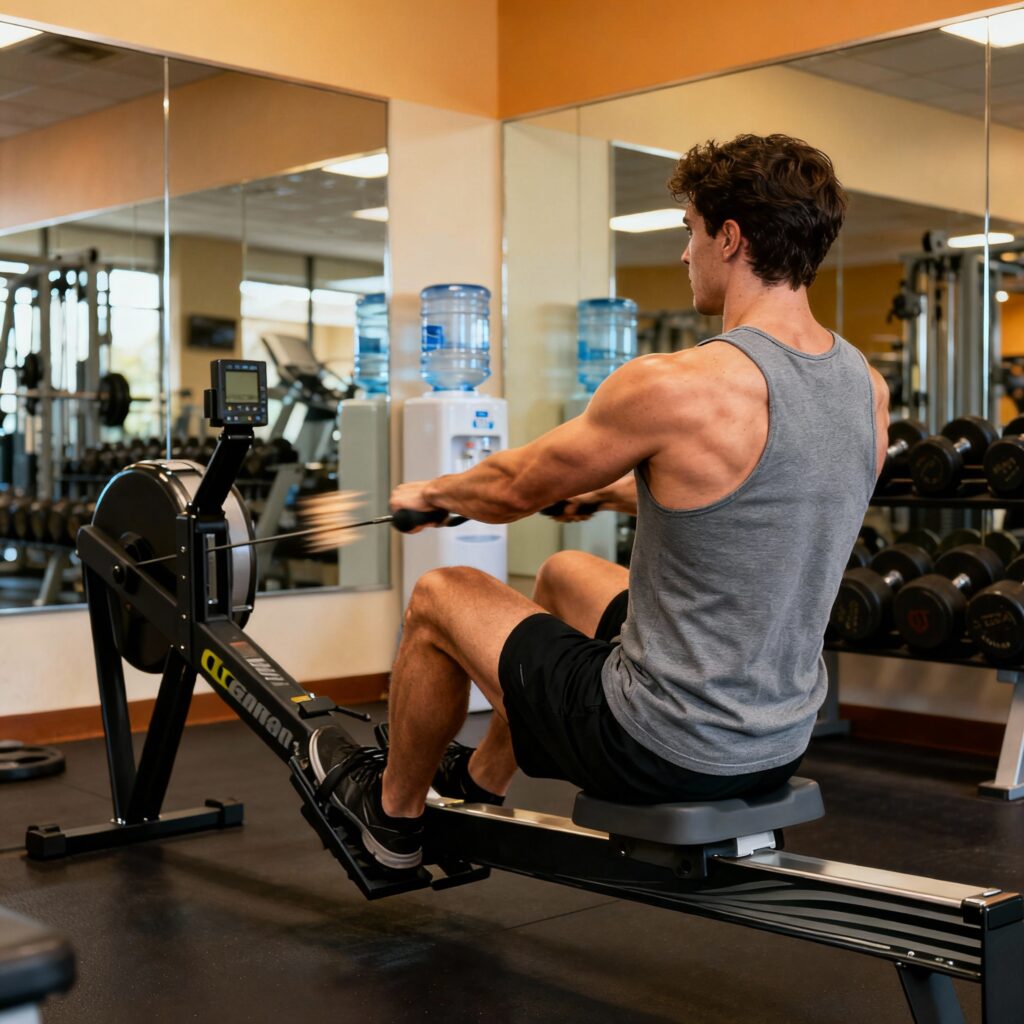
1. Understanding Functional Gym Workout
Functional gym workout emphasize motions that get your muscles used to functioning together in a harmonious manner. Rather than training a single muscle at a time, they instruct the body to act as a whole.
For instance:
- Squats simulate sitting and standing.
- Deadlifts simulate lifting something heavy off the floor.
- Push-ups create pressing power while stabilizing the core.
These exercises are particularly beneficial to athletes, seniors, and anyone who wants to avoid injury. Because functional exercise relies on the body’s natural mechanics, they enhance mobility, flexibility, and balance.
2. Full Body Workouts: An All-in-One Approach
Full body workouts exercise large muscle groups—legs, back, chest, shoulders, arms, and core—during one session. They are very effective for individuals with tight schedules who desire optimal results in a shorter time.
A standard full body gym workout may involve:
- Squats (lower body)
- Bench press (chest and arms)
- Deadlifts (back and legs)
- Pull-ups (back and shoulders)
- Planks (core stability)
Combining these exercises creates strength evenly throughout the body and prevents imbalances caused by training one or two muscle groups.
3. Primary Functional and Full Body Workout Categories
In order to make functional training productive, gym workout can be placed in some general categories:
a) Strength-Based Functional Workouts
These emphasize developing raw strength. Examples are squats, lunges, and deadlifts. Wearing weights adds resistance and strengthens the bones.
b) Cardio Functional Workouts
These types of exercises develop stamina and endurance while working multiple muscle groups. Running, cycling, and elliptical training are popular examples.
c) Core Functional Workouts
A stable core is critical for stability and avoiding injury. Planks, mountain climbers, and rotational exercises such as Russian twists are examples.
d) Mobility and Flexibility Workouts
Yoga, Pilates, and stretching enhance range of motion and aid in recovery. These enhance strength training by maintaining flexibility in muscles and joints healthy.
e) Blended Full Body Circuits
Circuit training integrates strength, cardio, and core into a single session. It is a time-saving approach to exercising the entire body while maintaining heart rate elevated.
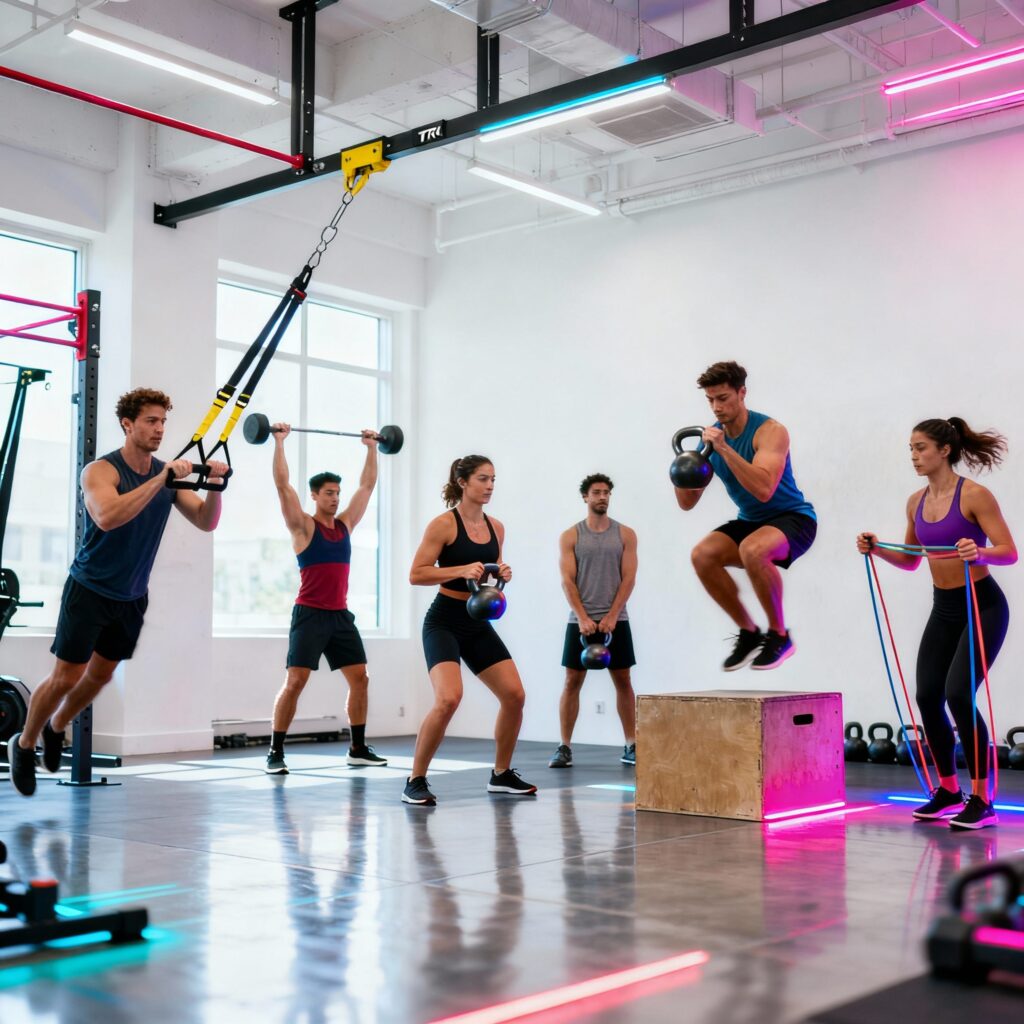
4. Gym Workout for the Back: The Strength Foundation
When people think of full body gym workout, they often overlook the importance of the back. However, a strong back is essential for posture, stability, and overall performance. Back muscles support nearly every movement, from lifting to walking.
Some effective gym workout for back include:
- Pull-Ups: Build upper back and lats strength.
- Seated Row: Targets the mid-back and improves pulling power.
- Deadlifts: Work the entire posterior chain, including glutes and hamstrings.
- Lat Pulldown: Excellent exercise for beginners who are not yet able to do pull-ups.
- Face Pulls: Tightens the rear delts and upper traps, which helps to improve posture.
Having a strong back also prevents injury, especially in individuals who spend many hours sitting at a desk.
5. Role of Elliptical in Functional Workouts
The elliptical trainer is underrated, but it is a giant when it comes to functional gym workout training.
In contrast to running on concrete, the elliptical delivers a low-impact cardiovascular workout that does not put much pressure on joints but still develops endurance.
Advantages of elliptical training:
- Involves both upper and lower body at once.
- Develops cardiovascular endurance without overstraining.
- Enhances balance and coordination with rhythmic movement.
- Aids in burning fat as it strengthens the muscle.
Adding 20–30 minutes of elliptical training to a workout regimen can complement strength training and deliver an overall fitness increase.
6. Gym Workout for Back: Functional Variations
You don’t have to confine back exercises to the machine or weights. Functional variations develop real-life strength and also address the core.
Some examples are:
Farmer’s Carry: Walking with heavy dumbbells strengthens grip, back, and core.
Kettlebell Swings: Activate the posterior chain, developing power and explosiveness.
Single-Arm Rows: Enhance unilateral strength and correct imbalances.
Medicine Ball Slams: Engage lats, shoulders, and core while also serving as a stress relief.
By combining traditional gym workout training with functional movements, you have a balanced method of back training.
7. Blending Strength and Cardio: The Ideal Mix
For long-term success, a blend of strength and cardio gym workout training is the best. Strength training increases muscle mass and metabolism, while cardio increases stamina and heart health.
Sample routine:
10 minutes of warm-up (elliptical or jump rope)
Strength circuit (squats, push-ups, pull-ups, planks)
15 minutes of HIIT cardio (sprinting, cycling, or rowing)
Cool down with stretches
This routine allows you to burn calories, build muscle, and enhance endurance within one session.
8. Nutrition and Recovery for Functional Training
No exercise is complete without nutrition and recovery. Muscles require fuel and rest to become stronger.
Key points:
Protein: Muscle repair (chicken, fish, eggs, lentils).
Carbohydrates: Fuel exercises (whole foods, fruits).
Healthy Fats: Maintain hormones and joint function (nuts, olive oil).
Hydration: Avoids fatigue and muscle spasms.
Sleep: A minimum of 7–8 hours for effective recovery.
Injury prevention and performance enhancement strategies such as foam rolling, stretching, and yoga also assist.
9. Mental Wellness Gains of Functional and Full Body Exercise
Physical exercise is not just for the body but also the mind. Functional and full body exercise creates endorphins, which decrease stress and enhance mood.
- Increases confidence by enhancing posture and strength.
- Decreases anxiety through rhythmic breathing and motion.
- Enhances concentration by teaching discipline and routine.
- Encourages improved sleep through physical activity and relaxation.
By conditioning the body to perform better, you condition the mind to stay tough.
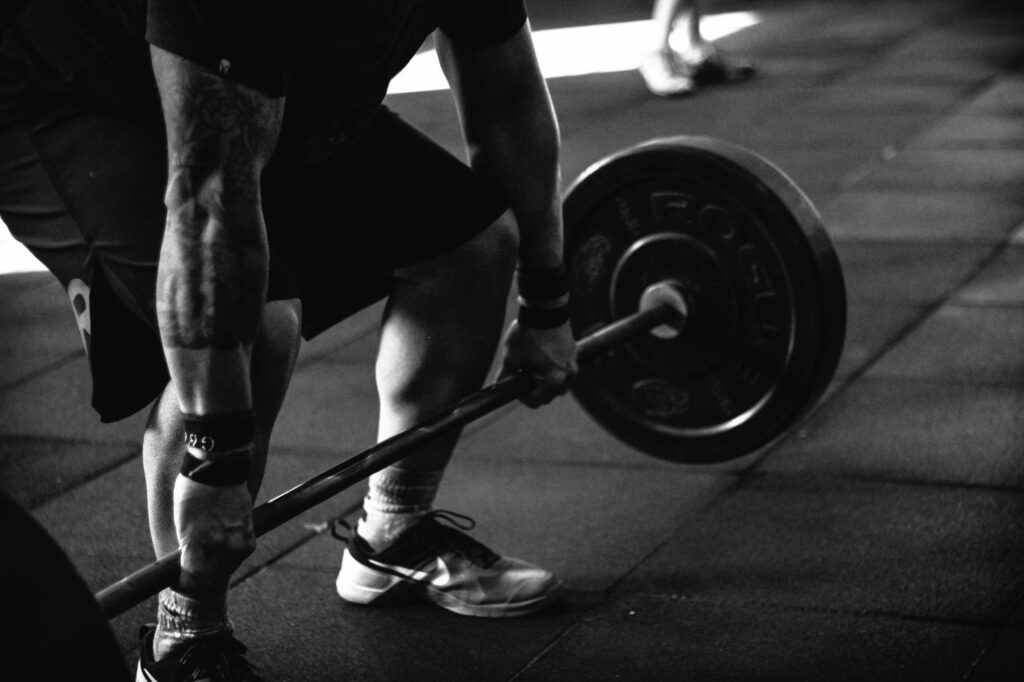
10. Sample 5-Day Functional/Full Body Workout Plan
Day 1: Strength + Back Focus
- Squats (3×12)
- Pull-ups (3×8)
- Seated Rows (3×12)
- Deadlifts (3×10)
- Plank (3×1 min)
Day 2: Cardio + Core
- 20 minutes elliptical
- Mountain Climbers (3×20)
- Bicycle Crunches (3×15)
- Side Plank (3×45 sec each side)
Day 3: Full Body Circuit
- Push-ups (3×15)
- Kettlebell Swings (3×20)
- Farmer’s Carry (3×30 sec)
- Jump Squats (3×12)
- Russian Twists (3×20)
Day 4: Mobility + Light Strength
- Yoga stretches (20 min)
- Lunges (3×12 per leg)
- Face Pulls (3×15)
- Glute Bridges (3×15)
Day 5: Mixed Functional Training
- 10 min elliptical warm-up
- Deadlifts (3×12)
- Medicine Ball Slams (3×15)
- Push Press (3×10)
- Burpees (3×12)

Progressive Concepts in Functional and Full Body Exercises
1. The Function of Unilateral Training
Unilateral exercises engage one side of the body at a time. Single-leg squats, single-arm dumbbell presses, and step-ups are examples.
These movements assist:
- Corrects muscular imbalances.
- Improves stability and coordination.
- Increases core activation since the body stabilizes while moving.
With the addition of unilateral movement, functional training [ gym workout training] becomes more dynamic and more reflective of real-world activities where one limb is usually working on its own.
2. Explosive Functional Training
Training for gym workout explosive movements involves quick, forceful movements. Jump squats, medicine ball throwing, kettlebell swings, and plyometric push-ups enhance:
- Speed and agility.
- Everyday muscle power.
- Sports performance.
Even non-athletes can benefit from adding controlled explosive movement to exercise, which enhances neuromuscular coordination and raises metabolic rate.
3. Grip Strength and Functional Fitness
Grip strength is not always considered but is very important for daily activities such as grocery shopping, opening tin cans, or even carrying heavy weights. Functional gym workout that enhance grip are:
- Farmer’s carries.
- Deadlifts using a thick bar.
- Rope climbing or battle rope training.
Having a strong grip also enhances one’s performance on other lifts, especially pulling movements such as rows and pull-ups.
4. Adding Balance and Stability Tools
Balance is a fundamental aspect of functional fitness. Gym workout Training with tools such as BOSU balls, balance boards, or stability balls can improve:
- Proprioception (sensation of body in space).
- Core activation on regular exercises.
- May prevent injuries through enhanced control of joints and muscles.
For example, doing a single-leg dumbbell press on a BOSU ball recruits several stabilizing muscles that conventional floor exercises might not.
5. Dynamic Warm-Ups and Pre-Activation
Numerous individuals forego proper warm-up exercises, which may constrain performance and grow the risk of injury. Functional gym workout exercises are enhanced by dynamic warm-ups such as:
- Arm, leg, and torso swings.
- Bodyweight lunges, squats, or hip bridges.
- Pre-activation exercises such as band pull-apart or glute bridges.
This tactic guarantees muscles are activated and joints are ready for more challenging full body movements.
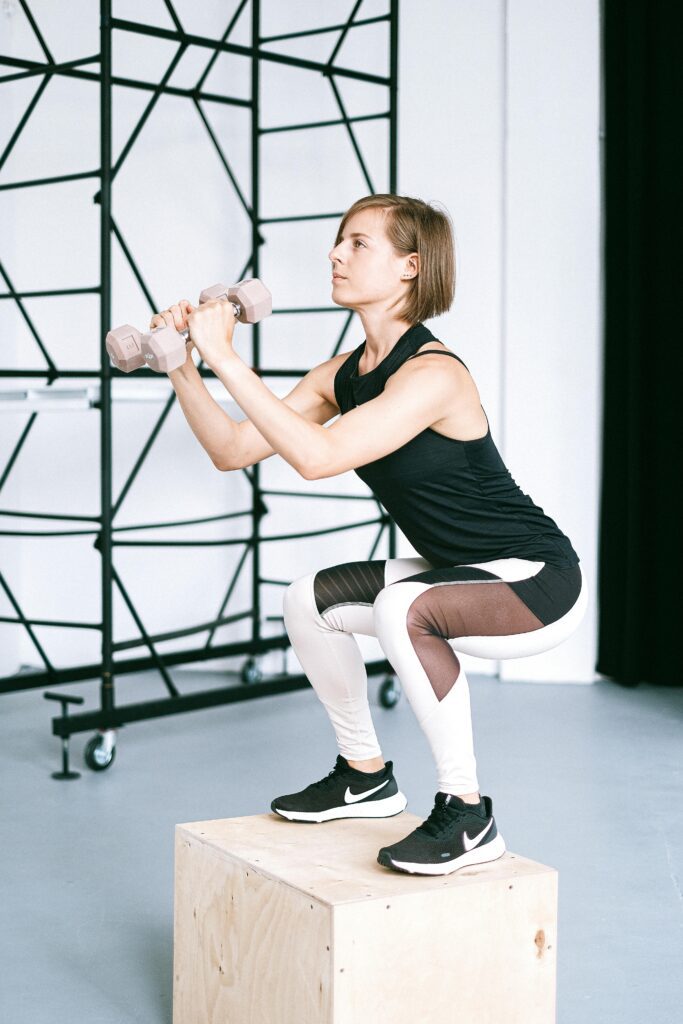
6. Progressive Overload in Functional Training
Progressive overload isn’t just for bodybuilding—it’s vital in functional fitness too. Gradually increasing resistance, complexity, or duration allows continuous adaptation:
Add weight to bodyweight exercises.
Increase range of motion or tempo.
Extend circuits or add repetitions.
Structured progression improves strength, endurance, and functional performance without overtraining.
7. Functional Training for Joint Health
Full body and functional exercises are great for joint mobility and resilience. Controlled movements make tendons and ligaments stronger, holding joints stable under stress. Some approaches are:
- Controlled eccentric movements (slowing the lowering of weights).
- Multi-plane exercises (rotations, side lunges).
- Adding mobility drills such as shoulder dislocations or ankle mobility exercises.
These routines not only avoid injury but also improve the quality of daily movements.
8. Integration of Mind-Body Awareness
Functional training is not simply physical; it involves mind-body consciousness. Paying attention to posture, breathing, and conscious movements enhances:
- Coordination and stability.
- Efficiency of muscle engagement.
- Mental focus and stress reduction.
Exercises such as Turkish get-ups or slow kettlebell presses are good examples where consciousness makes both performance and safety better.
9. Mixing Functional Training With Other Forms of Fitness
For optimal outcome, functional training can be mixed with other forms of fitness:
Yoga: Improves flexibility, breathing, and equilibrium.
Pilates: Builds the core and stabilizing muscles.
High-Intensity Interval Training (HIIT): Enhances cardiovascular endurance while ensuring full body engagement.
This blend ensures that functional exercises are strength-oriented but also enhance endurance, flexibility, and mental health.
10. Outdoor Functional Workouts
Functional training is not just for the gym. Outdoor training in sand, uneven ground, or bodyweight circuits strengthens:
- Stabilization on uneven ground.
- Explosiveness and versatility in natural movements.
- Mental stimulation and engagement with nature.
Examples are hill sprints, sled pushes, tire flips, and outside circuit training on benches, stairs, or playground equipment.

11. Functional Training for the Efficiency of Daily Life
The real purpose of functional exercises is to enhance efficiency of daily life.
Some examples:
- Carrying groceries with proper posture to prevent back strain.
- Lifting a child safely using hinge motions.
- Rushing up stairs without knee or back pain.
Training in pattern of movement rather than mere muscle isolation directly carries gym performance to real-world activities.
12. Monitoring Functional Fitness Gain
Functional fitness isn’t all about looks; monitoring performance is everything:
Quantify gains in balance and stability.
Monitor strength improvements in compound movements such as squats and deadlifts.
Monitor endurance performance, for example, number of circuits finished in a given time period.
Monitoring progress ensures ongoing improvement and maintains motivation.
13. Recovery and Active Rest are Important
Recovery is an important yet commonly neglected aspect of functional training:
- Active recovery such as light walking or yoga enhances blood flow.
- Foam rolling and stretching avoid stiffness and enhance mobility.
- Adequate nutrition and sleep promote muscle repair and joint health.
This promotes longevity with functional fitness and avoids burnout.
14. Advanced Techniques: Tempo, Pauses, and Variations
Incorporating tempo (slow or explosive), pause, or variation into functional exercises boosts intensity:
- Slow eccentric squats for activation of the glutes and quads.
- Pause a push-up at the bottom to activate the core and chest.
- Alternative grips or stances can be used for pulling or lifting exercises.
These adjustments turn familiar exercises into tougher, functional ones.
15. Functional Gym Workout for Mental Toughness
Last but not least, functional training also creates mental toughness:
- Pushing through circuits creates discipline.
- Multi-tasking movements enhance focus and cognitive coordination.
- Endurance challenges, such as prolonged carries or repeated complicated movements, create resilience.
Mental toughness forged in the weights room translates into everyday life, allowing people to better manage stress and multitasking.

Conclusion: Building a Balanced and Functional Body
Functional and full body gym workout are more than a fitness trend—they’re a way of living. By training several muscle groups, emphasizing life-like movement patterns, and balancing strength with cardio, you prepare your body for everyday demands.
Whether it’s gym workout back exercises, elliptical training, or functional gym workout for back, each element contributes to building a body that is strong, resilient, and capable. Add in proper nutrition and recovery, and you’ll not only look fit but also feel healthier, happier, and more energetic.
If you are looking for a fitness method that builds both strength and everyday performance, functional and full body exercises are the solution. Begin today, remain consistent, and notice how your mind and body change simultaneously.
Frequently Asked Questions (FAQs)
Q1. What is the difference between functional workouts and full body workouts?
Functional exercises are designed to mimic everyday movements that enhance daily performance and mobility. Full body exercises work on all the major muscle groups in one session, providing strength and endurance training in a balanced manner.
Q2. Functional gym workout suitable for beginners?
Yes, functional gym workout are perfect for beginners. They incorporate natural movement patterns such as squats, push, and pull, which are safe and effective for everyone.
Q3. Can I gain muscle through full body workouts?
Yes. Full body workouts integrate strength exercises and resistance training that build muscle and also enhance endurance. Incremental addition of weights aids in developing lean muscle mass.
Q4. How frequently should I perform a full body workout?
Most individuals find 3 to 4 full body workouts a week sufficient, with at least one day of rest in between. This enables muscles to heal and become stronger.
Q5. Are gym workout on back really necessary in a full body routine?
Yes, back exercises are crucial. Having a strong back helps maintain posture, avoids injury, and balances the upper body. Pull-ups, deadlifts, and rows are essentials to include in any full body routine.
Q6. How does the elliptical contribute to functional training?
The elliptical offers low-impact cardio that strengthens upper and lower body. It’s an excellent addition to enhance endurance, enhance balance, and aid in recovery from high-impact training.
Q7. Can functional exercises enhance mental health?
Yes. Functional and full body exercises release endorphins, decrease stress, and enhance concentration. They also help improve sleep and resilience, which benefits mental health as well as physical strength.
Q8. Do I require equipment for functional training?
Not necessarily. Bodyweight exercises such as push-ups, squats, and planks are very effective. Equipment such as kettlebells, resistance bands, and medicine balls can be used to provide variety and intensity, however.
Q9. Is it advantageous to do strength training or cardio first during a session?
It all comes down to your objective. If your objective is to build strength, begin with weight training. Begin with cardio if endurance is your goal. A lot of people like to mix both with circuit training.
Q10. How many weeks does it take to notice results from functional or full body workouts?
With consistency, correct nutrition, and rest, visible results usually manifest themselves within 6–8 weeks. Progress can be different based on personal levels of fitness and objectives.