
Table of Contents
1. Introduction
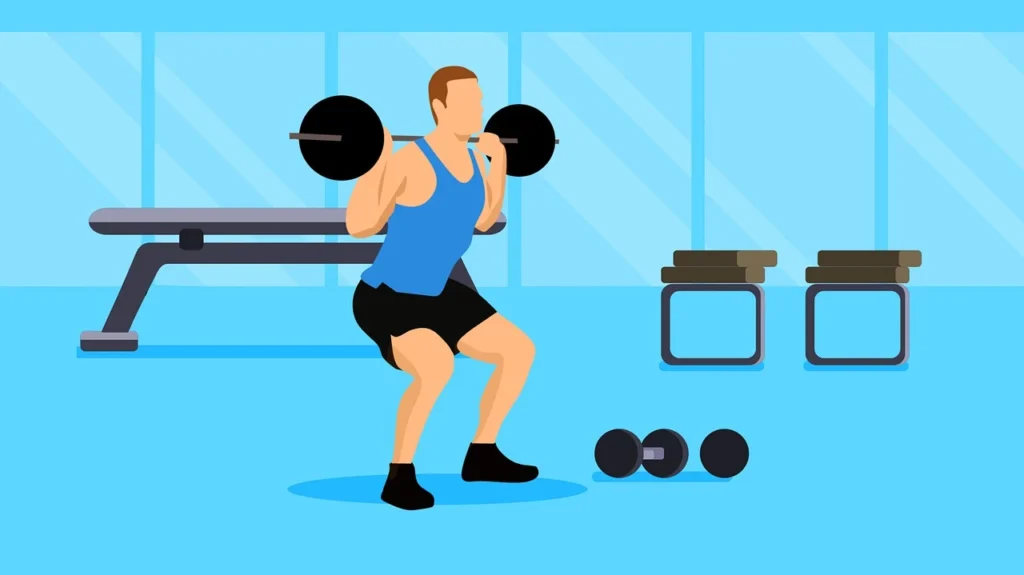
Building strength isn’t just about lifting heavy weights; it’s about lifting correctly. Whether you are a newbie or have years of training experience, the fact is pretty straightforward: your form determines your progress. You might go to the gym every day, but if you perform common Squat Mistakes or do your barbell bench press with bad technique, you will limit growth and increase injury risk.
The squat and barbell bench press are two of the most powerful compound movements in strength training. These movements build full-body power, improve posture, and enhance athletic performance. Yet, many lifters unknowingly perform these movements incorrectly, leading to slower gains and joint discomfort.
Think about it: when you’re doing a squat, you aren’t just training your legs. You engage your core, your hips, and your back. Similarly, during the barbell bench press, you’re working your chest, shoulders, and triceps, but your core stability also plays a major role. So, every rep should count.
This tutorial will break down 7 major squat mistakes most people make and show you how to fix them. You will also learn how both the barbell bench press and leg extension machine can support your lower body training. By the end, you will know how to train smarter, build stronger legs, and stay injury-free-the real goal of any effective fitness journey.
2. The Importance of Proper Form in Strength Training
Form is everything. It’s what separates a safe, effective workout from one that causes long-term damage. When you perform exercises like the squat exercise or barbell bench press, your muscles and joints work together as a system. If one part moves incorrectly, the rest of your body compensates — and that’s when injuries happen.
In strength training, form ensures each muscle group performs the job it is intended to do. Example:
During a squat exercise, most of the load should come from your glutes and quadriceps. If your knees are caving in or your back is rounding, you’re putting unnecessary stress on your spine or your ligaments.
In a barbell bench press, your chest should be the main mover. However, poor positioning of the wrist or shoulder shifts pressure to your joints instead of the muscles.
When form breaks down, so does progress. You might still lift heavy, but in the long run, you aren’t getting any stronger. Worse, your mobility decreases, your recovery slows, and your body develops imbalances.
Machines such as leg extension machines help you to learn control and muscle activation before moving to heavier lifts. They are good for isolating specific muscles, especially the quads, which have a big role in knee stabilization during squats. Machines should always be complementary and not replace compound lifts.
Good form also enhances your neuromuscular connection. By focusing on the proper range of motion, tempo, and engagement of the muscles involved, you are involving more fibers and thus developing strength faster. Over time, attending to such minute details will only make workouts more efficient and rewarding.
Another very important factor is breathing. Most people underestimate how it affects their performance when it comes to compound lifts. In both the squat exercise and the barbell bench press, learning to brace your core and control your breath can drastically improve stability and lifting power.
First, before we go through the Squat Mistakes you need to fix, remember this: form builds strength. It’s not just about doing more reps or lifting more weight, it is about doing it right every single time. The difference between a good and bad workout doesn’t depend on effort alone, it does on precision.
When you pay attention to form, even a basic movement like the leg extension machine can help fill in the gaps that are holding you back in your squat exercise. Similarly, when your upper body becomes stronger with a barbell bench press, it supports your posture and stability in squats. After all, strength is a full-body effort.
3. Common Squat Mistakes That Ruin Your Gains
When performed correctly, the squat creates powerful legs, strengthens the core, and enhances athletic ability. When done in poor form, it creates knee pain, strain on the back, and slows progress. These Squat Mistakes are common even among advanced lifters-and the good news is they’re easy to fix once you learn to recognize them.
So, let’s break down the 7 major Squat Mistakes that hold you back and how to correct each one.
3.1 Mistake #1 – Rounding the Back During Squats
The biggest squat mistakes beginners make: They round their lower back while descending; this happens when you either lack core strength or hip mobility. A rounded spine puts dangerous pressure on the lower back and reduces power output.
How to solve it:
Engage your core before every rep. Visualize bracing yourself as if someone is about to punch you in the stomach.
Keep your chest up and shoulders pulled back.
Use a mirror or record your set in order to check for rounding.
Accessory movements to strengthen the back, such as deadlifts or barbell bench press, help to balance posture.
3.2 Mistake #2 – Knees Caving In
With your knees falling inward during the squat exercise, this means your glutes along with your abductors are weak. This reduces not just your strength but can also strain your ligaments.
Fasten:
Focus on pushing your knees outward while you rise.
Add banded squats and glute activation drills into your warm-up.
Develop the quads with the leg extension machine, but make sure to combine such exercises with glute-focused work for full balance.
3.3 Mistake #3 – Not Squatting Deep Enough
One of the most frequent squats mistakes is partial squats. Stopping midway restricts your muscle engagement, notably in the glutes and hamstrings.
Solution:
Work on flexibility in your hips and ankles to increase range of motion.
Lower down until your thighs are parallel or a bit below parallel to the floor.
If balance is difficult, use a bench or box in order to measure depth safely.
Machines like the leg extension machine can help pre-activate the quads before attempting full-depth squats.
3.4 Error #4 – Improper Foot Position or Balance
Everything in your squat exercise is determined by the placement of the feet: stability, generation of force, and alignment. Too narrow, and you’re losing balance; too wide, your knees may twist uncomfortably.
Correcting:
Set your feet shoulder-width apart, keeping the toes slightly outward.
Keep your heels down at all times, never raised.
Envision yourself spreading the floor apart with your feet as you rise — this engages stabilizing muscles.
The feeling of stability can also be enhanced by practicing the barbell bench press with correct foot drive.
3.5 Mistake #5 – Lifting Too Heavy Too Soon
Chasing numbers too fast is the classic ego trap. Too many lifters load the bar before they’ve mastered form; this leads to the most dangerous of all Squat Mistakes.
Focus on technique before adding plates.
Progressive overload: Increase the weight progressively every week.
Mix in accessory lifts such as the leg extension machine for controlled, lighter isolation work.
Always keep in mind that even the barbell bench press improves faster once you have a solid foundation.
3.6 Mistake #6 – Ignoring Breathing Technique
Bad breathing breaks your rhythm and reduces core tension, which can make the squat exercise less stable.
Solution:
Inhale deeply before you go down, expanding your belly instead of your chest.
Hold your breath-the Valsalva maneuver-as you push up through the toughest part of the lift.
Exhale only once you’re past the sticking point.
Apply the same breathing method to your barbell bench press for better control and power.
3.7 Mistake #7 – Skipping Warm-Up and Mobility Work
Jumping straight into heavy lifts without warming up is one of the most avoidable Squat Mistakes. Cold muscles tighten under load, thus increasing the risk of injury.
Solution:
Spend 5–10 minutes on dynamic warm-ups: leg swings, hip circles, and body-weight squats.
Include glute bridges and light leg extension machine sets for activation.
Gradually add weight across the warm-up sets before your working squats.
If your program also includes the barbell bench press, apply the same rule — light sets first, heavy later.
Bonus Tip: Track your progress and form
Minor mistakes are often overlooked unless one observes them. Filming your lifts or training with a coach helps you catch form issues early on. The sustained awareness will prevent the development of bad habits and make each squatting exercise more effective.
When you fix these Squat Mistakes, your body moves more efficiently. You’ll notice faster progress in strength, better muscle symmetry, and less post-workout pain. Every repetition becomes a step closer to real power.
4. How the Barbell Bench Press Complements Squat Training
Most people separate upper and lower body training, but real strength comes from balance. The barbell bench press and squat exercise may look completely different, yet they rely on many of the same principles: stability, control, breathing, and core engagement.
The posture during a squat depends mainly on the strength in your upper body. The stronger your chest, shoulders, and arms are, the better you naturally hold the bar and keep your torso up.
That is why many top lifters make sure to include the barbell bench press in their leg-oriented programs. It teaches you how to brace your core and drive power from your whole body, rather than just your legs.
In a barbell bench press, the shoulder blades are kept tight, the feet press into the ground, and the spine is kept neutral. These same cues carry over to the squat exercise: full-body tension and control in both movements are called upon.
Another connection is with breathing. If you have practiced good breathing on the bench, you will apply it automatically during squats. The deep inhale-brace habit before the drop provides you with greater stability throughout heavy lifts.
Poor form in either movement often reflects the same general weaknesses. For example:
Rounded shoulders in barbell bench press generally mean your upper back muscles are weak, which in turn also affect your squat stability.
Arching over your lower back on the bench mimics the same spinal pressure found in bad squats.
So improving your bench press technique isn’t just for chest gains; it’s for total body improvement. It strengthens the foundation that carries over into your lower lifts.
A sample combination might be the following:
- Day 1: Barbell Bench Press + Squat Exercise (moderate weight)
- Day 2: Rest or active recovery
- Day 3: Accessory work (Leg Extension Machine, lunges, glute bridges)
- Day 4: Heavy Bench + Light Squats
This routine balances your upper and lower body, improves performance, and enhances recovery. As you master the barbell bench press, you’ll notice better control during squats, less shoulder rounding, and improved power transfer.
5. The Role of the Leg Extension Machine in Fixing Squat Weakness
This neglects the importance of the leg extension machine, which comes in quite handy for correcting muscular imbalances brought on by poor mechanics in the squat.
Many lifters stress compound lifts like the squat exercise and then exclude isolation work. However, it’s the isolation movements that fill in the gaps in an individual’s musculature that prevent form breakdowns.
The leg extension machine isolates the quadriceps-one of the main muscles involved in every variation of the squat. Strong quads stabilize your knees, help you maintain balance, and protect against injury.
When your quads are weak, your knees tend to cave in or wobble-one of the classic Squat Mistakes.
How the Leg Extension Machine Helps
- Targets Weak Quads:
- Since the motion of a leg extension machine is controlled, you can strengthen your quads without putting your back or hips under any stress. This builds the support your knees need during squats.
- Improves Knee Stability:
- Many of the injuries during squats come from instability. Performing slow, controlled reps on the leg extension machine trains your knees to stay in alignment, especially when paired with glute exercises.
- Enhances Muscle Activation Before Squats:
- Doing light sets on the leg extension machine before going into your squats serves to pre-activate the quads, ensuring that once you move to your main squat exercise, those muscles will have reached a warmed-up, engaged state.
- Rehabilitation and Recovery:
- The leg extension machine serves as a safer alternative for those coming back from injuries of the knee or leg before returning to heavy squats, letting you build the muscle gradually and maintain strength without full-body strain.
Sample Leg Extension Routine for Squat Support
Here is an easy way to incorporate it into your training:
Warm-up: 2 sets of 15 reps with light weight before doing squats
After Squats: 3 sets of 10–12 reps at moderate weight
Finisher: 1 drop set (start heavy, reduce weight, continue to failure)
This balances your workout by strengthening your quads, helping to prevent the most common Squat Mistakes: shallow depth and knee collapse.
Leg Extension Machine vs. Squat Exercise: Which One Is Better?
It’s not about which is better, it’s about how you use both. The squat exercise creates functional, full-body strength, while the leg extension machine refines your technique and isolates weaknesses.
Consider the machine as a supporting device that complements and never replaces your main lifts.
This can also serve as a good way to balance one’s program if they are struggling with form or recovering from bad habits, super setting the barbell bench press, squat exercise, and leg extension machine.
Combining these three exercises-squats, bench press, and leg extensions-you train your body as a whole. You’ll move better, lift more, and reduce the risk of repeating old Squat Mistakes.
6. How to Correct Squat Mistakes and Build Stronger Legs
Correcting Squat Mistakes isn’t about taking care of one fix; it is about developing long-term habits. Consistency in practice, awareness, and patience will be the mantra for every novice or experienced lifter. Here’s how you can fix your form and build powerful legs step by step.
Step 1: Begin with a Form Check
Before loading the bar, have someone record your squat exercise from the side and front. Observe your back rounding, knees caving in, or shallow depth. Sometimes these issues are easier to correct when you visually see them.
Step 2 Strengthen weak links
utmost thickset miscalculations be due to a muscle imbalance. When your glutes or hamstrings are weaker than your closes, you’re going to have a veritably hard time trying to stay in a stable position.
Use appurtenant lifts to fix this
Barbell Bench Press Builds upper- body strength that aids in posture and core stability.
Leg Extension Machine This helps strengthen the closes and provides much better knee control, therefore lesser thickset depth.
jabs & Romanian Deadlifts Balance strength from frontal and back.
Step 3 Prioritize Mobility
Tight hips, hamstrings, and ankles are typically what limit thickset depth. Add some dynamic stretching before your thickset exercise hipsterism circles, ankle rolls, and deep bodyweight squats. A more flexible lower body will both ameliorate your form and reduce the chance of pain or stiffness latterly on.
Step 4 Proper Breathing and Bracing
- Poor breathing is one overlooked factor that causes thickset miscalculations.
- Breathe deeply before descending.
- Hold your breath and engage your core.
- Exhale only after you have passed the hardest point in the lift.
This same fashion also enhances your barbell bench press, giving you better control and safety during heavy sets.
Step 5 Work on your tempo
Slow down. Fast, unbridled syllables frequently lead to sloppy form. Lower the weight under control and rise with intent. The control of tempo builds strength through the full range of stir and helps you feel where your form might break.
Step 6 Recover Right
Rest days are progress, too. Your muscles develop when you are recovering, not when you are training. Get enough sleep, drink plenitude of water, and gently stretch subsequently.
Take advantage of recovery tools similar as a froth comber or a massage gun to help with soreness and stiffness.
By following these way constantly, in time your thickset miscalculations will evaporate. Not only will you lift heavier, but you’ll also move more in and out of the spa.
7. Pro Tips to Avoid unborn thickset miscalculations
Correcting form is one thing, maintaining it’s relatively another. Then are somepro-level tips to keep your progress on track.
Warm up before every session
noway skip your warm- up. Take at least 10 twinkles to prepare your joints and muscles with light movements or on the leg extension machine before squinching.
Check Your Pride at the Door
Form before weight, always. One of the major reasons for recreating thickset miscalculations is adding weight before perfecting your form.
Record Your Lifts Regularly
Take a quick videotape check, which will help you notice if your knees are caving in or your reverse rounds. Small adaptations make a huge difference over time.
Add Upper- Body Work
Having a strong casket, shoulders, and arms helps ameliorate control over your barbell when doing syllables; the stronger the upper body, the better the lower body can hold a position.
thickness over complexity
Stick to the basics Squats, bench press, and leg extension machines work all the major muscle groups. Once you’ve learned those, you can try more advanced variations.
hear to Your Body
Pain is a signal and not a challenge.However, rather of pushing through, reduce the weight and dissect your form, If commodity feels wrong.
These bitsy but vital habits cover you from injury and make your exercises more productive. In the long run, staying clear of all these thickset miscalculations keeps your progress going without ARRAY.
8. Sample Weekly Training Plan
Then is a simple 4- day plan combining the thickset exercise, barbell bench press, and leg extension machine for erecting up total- body strength without creating imbalances.
Day 1 – Lower Body Strength
Back thickset – 4 sets of 8 reps
Leg Extension Machine – 3 sets of 12 reps
Romanian Deadlifts 3 sets of 10 reps
Standing Shin Raises – 3 sets of 15 reps
Day 2 – Upper Body Push
Barbell Bench Press – 4 sets of 8 reps
Dumbbell Shoulder Press 3 pools of 10 reps
Triceps Dips 3 sets of 12 reps
Core Work( Planks or Ab Rollouts) – 3 sets
Day 3 – Rest or Light Cardio
30 twinkles of walking, cycling, or yoga for mobility and recovery.
Day 4 – Functional Strength Front Squat –
4 sets of 6 reps Leg Extension Machine-
3 sets of 10 reps Barbell Bench Press
3 sets of 10 reps Pull- ups
3 sets to failure
Day 5 – Accessory Work Lunges
3 sets of 12 reps Cripple ringlets
3 sets of 12 reps Push- ups
3 sets of 15 reps Core & Stretching
Days 6 & 7 – Rest
This is a balanced program that does not overemphasize any particular muscle group. With the thickset, you’re working your legs on the leg extension machine, you’ll be fine- tuning the closes; and eventually, you work upper- body power with the barbell bench press.
Inclusively, they balance out your entire body less fatigue, better recovery, and smaller thickset miscalculations as time goes on.
9. Conclusion
Fixing thickset miscalculations is further than just perfecting a movement; it’s about training smarter. When you take the time to learn proper form, strengthen weak areas, and move with control, you make a foundation for lifelong strength and fitness.
Your stylish tools for this trip will be the thickset exercise, barbell bench press, and leg extension machine. Each bone plays a part The thickset develops total lower- body strength. The bench press balances upper- body stability and posture.
The leg extension machine fine- melodies your closes for support and perfection. By combining them and rehearsing thickness, you are n’t only suitable to lift heavier, but also feel much stronger and confident with every drill. miscalculations will be, but it’s how soon you correct them that matters.
So coming time you step under the bar, flash back focus on form, stay harmonious, and noway let pride replace fashion. That’s how you make real power, avoid painful thickset miscalculations, and achieve stronger legs that carry you forward — outside and outside the spa.
Great blog
Hey guys, just found 777vipp looked like a nice place to gamble. Im gonna try spend money here in a responsible way: 777vipp