
Table of Contents
1. Introduction: Why Bicep Exercises Are Key to a Lean, Defined Body
When it comes to building a lean and athletic body, the role of bicep exercises goes well beyond being able to flex your arms in public. The biceps are among the most visible upper body muscles, and training them properly gives shape and strength to your entire frame.
However, most people focus on lifting heavy without knowing that smart bicep exercises—combined with proper form, tempo, and control—are what create that defined look.
A lean body isn’t just about low body fat; it’s about muscle tone and proportion. Strong biceps improve arm balance, enhance shoulder stability, and even assist in everyday pulling movements like lifting, carrying, and rowing.
Well-structured bicep exercises train both the short and long heads of the muscle, ensuring that your arms look fuller from every angle.
Unfortunately, many people waste their effort on random movements or use unstable equipment, like a core ball, in the wrong way. A core ball could help engage your stabilizer muscles, but it shouldn’t be your main tool for any bicep exercise.
When used wrongly, it reduces tension, limits range of motion, and inhibits you from going heavy enough to stimulate growth.
The key is to prioritize classic compound and isolation movements first and only use the core ball as an ancillary tool for balance or rehabilitation purposes-not the mainstay of your bicep routine.
Consistency is everything. You don’t need fancy gym equipment ad infinitum; what you need is progressive overload, proper form, and smart recovery.
If you do these biceps exercises with correct posture and controlled motion, you’ll start noticing lean muscle growth within weeks. Combine that with proper nutrition-especially ample proteins and hydration-and your arms will not only look strong but also feel powerful too.

Within this tutorial, we will be talking about 7 killer bicep exercises that you actually need to build muscle fast, create visible definition, and avoid some common training errors-particularly those dealing with the misuse of the core ball.
These are not for show movements but designed to naturally change the overall aesthetic and strength in your arms. Let’s dive into the science, the form, and the execution behind each movement that will get you leaner, stronger, and more confident.
2. The Science Behind Bicep Growth
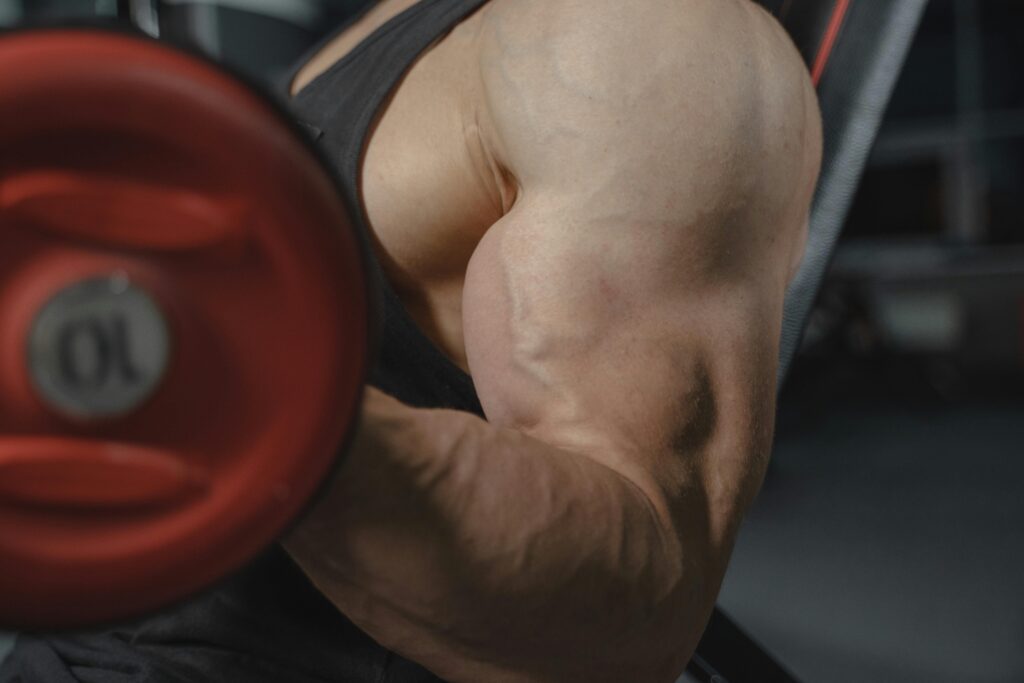
But first, to understand just how bicep exercises help you build a lean, muscular body, you need to know what’s going on beneath the skin. The biceps brachii, better known as the “biceps,” is a two-headed muscle located on the front of your upper arm.
Its primary function is to flex the elbow and rotate the forearm. Every time you do targeted bicep exercises, you engage thousands of muscle fibers that answer by repairing and growing stronger with every session of training.
How Muscle Growth Works
This is because every time you weightlift or do a resistance-based exercise for your biceps, there’s tearing occurring to the microscopic parts of the muscles.
These tiny tears trigger the body’s natural repair process; new, thicker fibers replace the ones damaged-and that is hypertrophy. The result? Bigger, more defined biceps over time.
Not all bicep exercises are created equal when it comes to spurring growth. If you want hypertrophy of the highest order, progressive overload is a concept one should consider: increasing the resistance, reps, or overall training volume progressively so that your muscles never fully adapt.
Tension and Form Matter More Than Weight
One of the biggest mistakes with bicep exercises is ego lifting, which involves using heavy weights but having poor form. It is when the muscle is under constant tension that it grows, not when momentum does the work.
Controlled eccentric or lowering and full-range curls activate both the short head (inner bicep) and the long head of the muscle (outer bicep), building your arms in balance.
Your grip also changes which part of the biceps gets more work. A wide grip emphasizes the short head, while a close grip targets the long head. Varying grips and angles ensures complete bicep development.
Why Core Stability Supports Arm Performance
While the arms themselves do the curling action, the core plays a major role in stabilizing the body during bicep exercises. If your core is weak, then your strength output is ultimately capped, along with your stability, making you more susceptible to injury. That’s where tools such as a core ball can make a difference-if used correctly. This revolves around balance and posture, thus, overall efficiency in your bicep workouts.
Bottom Line
Building leaner, stronger arms requires science-backed bicep exercises with perfect form, consistent overload, and strong core engagement. Focus on quality over quantity. Muscle doesn’t grow from chaos; it grows from controlled tension, recovery, and progressive resistance.
3. 7 Killer Bicep Exercises for a Lean Body
Well-defined and powerful arms aren’t about luck; rather, it is about selection and precision in performance of the right bicep exercises.
These seven movements target both heads of your biceps for maximum hypertrophy to get that lean muscular physique without wasting time on ineffective means of training.
- Barbell Curl – The Foundation of All Bicep Exercises
The barbell curl is the king of all bicep exercises. It allows you to lift heavy and overload your muscles efficiently.
Form Tip: Keep your elbows close to your sides, stand tall, and slowly curl the bar to shoulder height.
Avoid: Swinging the body or using momentum-it reduces muscle tension.
Pro Tip: Lower the bar slowly for maximum time under tension, which enhances muscle growth.
- Dumbbell Hammer Curl – Builds Thickness and Grip Strength
This variation not only grows your biceps but also strengthens your forearms.
How to Do: Hold dumbbells with neutral grip, palms facing each other, and curl up.
Why It Works: This targets the brachialis and long head of the biceps for a thicker arm.
Mistake to Avoid: Lifting too fast or letting the dumbbells bang together.
- Concentration Curl – Maximum Isolation
This is one of the best bicep exercises if you want precision.
How to Do: Sit on a bench, rest your elbow on your inner thigh and curl the dumbbell slowly.
Benefit: Complete isolation of biceps for clean, symmetrical shape.
- Chin-Up – Bodyweight Bicep Exercise for Functional Strength
Chin-ups are underrated yet powerful.
Grip: Palms facing you -supinated.
Focus: Pull with your arms, not your back.
Why It’s Great: It builds lean muscle and boosts real-world pulling strength.
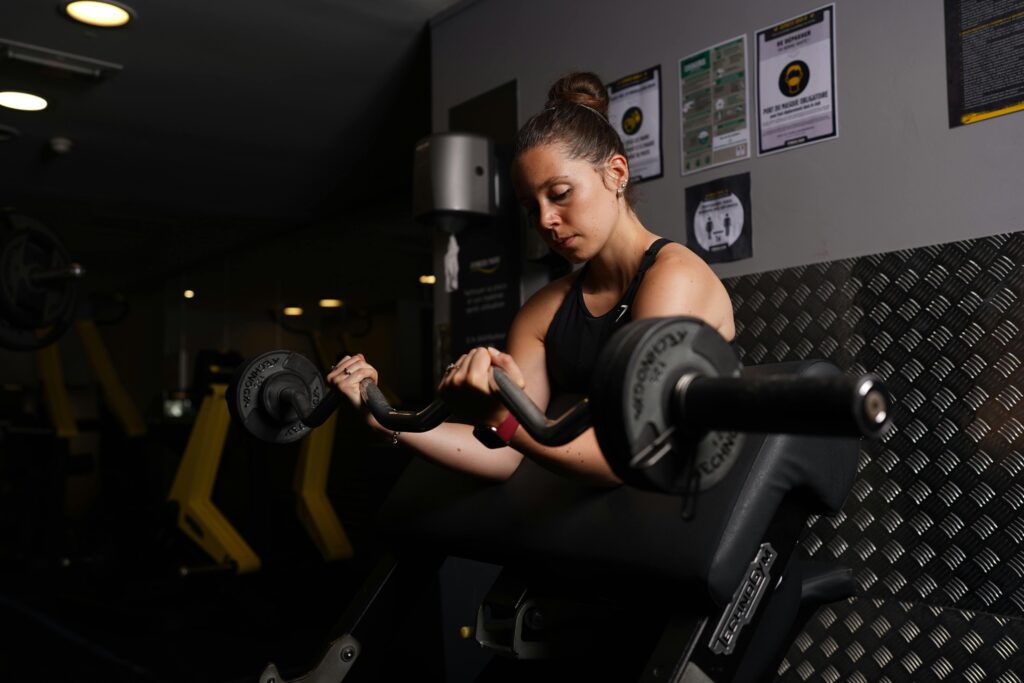
- Preacher Curl – Controlled Power
Preacher curls ensure strict form-no cheating.
Setup: Utilize a preacher bench while using an EZ bar or dumbbell.
Focus: Slow, smooth reps for complete isolation of the biceps.
- Incline Dumbbell Curl – Deep Stretch, Peak Contraction
This exercise gives the biceps their “peak.”
Angle: Lie on an incline bench with your arms hanging freely.
Tip: Curl both dumbbells simultaneously with full range of motion.
- Cable Curl – Constant Tension for Definition
The cable curl keeps your biceps engaged through every inch of motion.
Benefit: Perfect for shaping and finishing your workout.
Variation Try single-arm or rope attachments for added intensity.
Summary
These seven bicep exercises combine strength, isolation, and endurance. From hypertrophy to lean definition, cycling through them guarantees balanced arm growth and visible muscle separation. Use these consistently, and your biceps will change from average to sculpted.
4. Core Ball Mistakes That Kill Your Bicep Gains
A core ball (or stability, or Swiss ball) can be an excellent tool for balance, posture, and overall core strengthening, but what usually happens with bicep training is that it is grossly misused-completely killing your muscle gains.
The reality is that a core ball should enhance training, not replace solid, controlled weight work. Misusing it will only cause poor form, less tension on the biceps, and even potential injuries.
- Primary Bicep Work Using the Core Ball
One mistake guys commonly make is doing all of their bicep exercises seated or lying on a core ball. This minimizes stability, and your body has to use more energy to balance than to create tension in the muscles. When the body’s energy is divided, the biceps cannot fully engage.
Do heavy curls on a stable surface, whether it’s a barbell, dumbbell, or cable. Use the core ball for light, controlled movements and not for your main strength sets or during rehabilitation drills.
- Poor Posture and Incorrect Core Engagement
Another major problem is posture. Too many lifters slouch, overarch their back, or roll their shoulders forward on a core ball. Poor posture kills bicep activation.
Keep your spine neutral, shoulders retracted, and core engaged throughout each rep. If you can’t maintain posture, ditch the core ball and switch to a bench until your stability improves.
- Overuse of Instability Training
Instability training may look cool on social media, but it yields minimal muscle. Your biceps need tension and overload, both of which you lose when you’re wobbling on a ball.
Save instability tools for functional or rehab days. On strength days, prioritize controlled, progressive bicep exercises like barbell curls, preacher curls, or incline dumbbell curls.
- Lack of Progressive Overload
Core ball training often limits how much weight you can lift safely. If you don’t increase the resistance over time, eventually your muscles stop growing.
Gradually increase your dumbbell or barbell weight every week, but ensure that as you do so, form stays strict and movements remain smooth.
Bottom Line
The core ball isn’t your enemy-but misuse turns it into one. When you combine it intelligently with proper bicep exercises, it can improve balance and stability. But for serious muscle growth, rely on solid ground, proper tension, and structured overload-not instability gimmicks.
5. Lean Body Strategy: Nutrition + Training Combo
The best bicep exercises won’t provide an end result of a lean body if your nutrition and training strategy aren’t aligned. Building defined arms requires two key things: muscle growth and fat reduction. Without proper fuel, even perfect workouts won’t give you that shredded, lean look.
- Nutrition for a Lean, Muscular Physique
For a lean body, your diet needs to support recovery and fat loss.
Protein First: Every set of bicep exercises breaks down muscle fibers that need protein to rebuild. Aim for at least 1.6–2.2 grams of protein per kilogram of body weight daily.
Calorie Control: You want to have a slight deficit in calories to get lean, but not too much. If you cut your calories too fast, you lose muscle.
Smart Carbs and Fats: Consume complex carbs like oats and sweet potatoes to fuel your workout; consume healthy fats like almonds or olive oil to maintain the hormones that help in muscle recovery.
Hydration: Dehydration reduces strength and pumps. Water is crucial for the performance and appearance of muscles.
- Training for a Lean Body
To develop that lean and athletic physique, bicep exercises should be combined with full-body strength training and moderate cardio.
Resistance Training: Use progressive overload through increasing weight, reps, or intensity on a weekly basis. Compound lifts such as pull-ups and rows complement your bicep exercises by building overall arm and back strength.
Cardio with a Purpose: Doing too much cardio will eat into your muscle mass. Limit it to 3-4 moderate sessions per week: brisk walking, cycling, or short sessions of HIIT.
Active recovery includes rest days, which are very important. Your biceps grow while you are resting, not training. Gentle stretching, foam rolling, or light movements assist the muscles in repair and help maintain flexibility.
- Balancing Core and Arm Work
A strong core stabilizes every movement, especially when heavier bicep exercises are performed. Although a core ball can enhance balance training, it shouldn’t replace direct resistance work altogether. Keeping the core tight during curls prevents swinging and engages more muscle fibers.
Bottom Line
A lean body is the result of consistent effort, clean nutrition, and smart training. You can’t out-train a bad diet, and you can’t out-diet poor form. Pair your bicep exercises with discipline in the kitchen and intensity in the gym, and visible definition and strength will be yours within weeks.
6. Pro Tips for Faster Bicep Gains
You can do bicep exercises for months, but if you’re not training strategically, growth will plateau fast. Building lean and strong arms isn’t about doing more; it’s about doing smarter. These proven tips will help you speed up your bicep gains while maintaining lean and aesthetic-looking arms.
- Prioritize Progressive Overload
The golden rule to muscle growth is progressive overload: constantly challenging your muscles with ever-increasing tension over time.
How: Increase the dumbbell or barbell weight over time, add an extra set, or use a slower tempo to increase time under tension.
Why It Works: Your biceps are quick to adapt; without overload, they will not grow. Every week, go a bit harder: more weight, more volume, or stricter form.
Consistent overload is the difference between average results and real transformation.
- Master Form Before Weight
Perfect technique is exactly what separates effective bicep exercises from wasted effort.
Keep your elbows fixed.
Do not swing or jerk the weight.
Focus on the contraction — squeeze your biceps hard at the top of every curl.
Keep in mind: momentum builds ego, not muscle. Control builds definition and power.
- Train Biceps Twice a Week
Hitting your biceps once a week just isn’t enough to create any serious progress. Training them twice a week with a mix of heavy compound lifts and isolation bicep exercises will help maximize volume while still allowing recovery.
Example split:
Day 1: Barbell curls + hammer curls (strength focus)
Day 2: Concentration curls + cable curls (definition focus)
- Don’t Ignore Recovery
Overtraining kills growth. Your muscles need at least 48 hours to repair and grow after an intense bicep workout. Prioritize:
Sleep: A minimum of 7–8 hours every night.
Nutrition: Protein and carbs post-workout.
Rest: Avoid extra sets that aren’t needed; sometimes more isn’t better.
- Mind-Muscle Connection Is Key
This is what’s often missed. While you’re doing your bicep exercises, focus on the muscle contracting and lengthening with every repetition. It adds to mental focus, enhancing the activation of your muscles and making sure that every curl counts.
Bottom Line
You don’t need dozens of random workouts; all you need is disciplined execution. Nail form, progression, and recovery in your bicep exercises, and your arms will start showing real, lean definition a lot faster than you might expect.
7. Common Bicep Exercise Mistakes (and How to Fix Them)
Even the best exercises for biceps will never work when your execution is wrong. Most people in the gym perform subtle yet costly mistakes that limit muscle activation, cause fatigue, or even injuries. Understanding such errors—and fixing them immediately—is the difference between slow progress and fast, visible results.
- Using Momentum Instead of Muscle
The most common mistake in bicep exercises is swinging the weight. The moment you use your back or shoulders to lift, your biceps lose tension, killing growth.
Stand tall, keep your elbows close to your sides, and lift under full control. Focus on the upward squeeze and the slow lowering phase to maximize time under tension.
- Partial Range of Motion
Most people either curl the weight up only halfway or rush through reps. Partial range cuts your muscle engagement short.
Perform full curls, from full extension of the arm to full contraction. The longer the muscle works, the greater the hypertrophy (growth of muscle).
- Overtraining without recovery
Sometimes, more isn’t better. Continuously overworking your biceps with set after set of curls will work them into a state of fatigue, not one of size. A muscle needs rest to rebuild and grow stronger.
Limit the number of direct bicep exercises to 10–14 quality sets per week. Take rest days and focus on sleep and nutrition to help speed recovery.
- Neglecting the Forearms and Opposing Muscles
Working only on the biceps can cause muscular imbalance. Weak forearms and triceps reduce stability and overall arm strength.
Balance your routine with forearm curls, reverse curls, and triceps work. Strong supporting muscles allow you to lift heavier weights and do bicep exercises more effectively.
5. Poor Grip and Wrist Position
Bad grip causes pain in the wrist and reduces bicep stimulation. Keep your wrist neutral, without bending either backward or forward when curling. Vary your grip width according to comfort and muscle engagement
. Ignoring Mind-Muscle Connection Treating bicep exercises like a checklist ruins your results. When you don’t focus on the contraction, you waste reps.
Focus on feeling the muscle stretch and tighten with every rep. Controlled tension equals better pump and definition.
Bottom Line
Bad habits kill progress. Clean up your form, eliminate ego lifting, and make every rep count. Once you avoid these mistakes, your bicep exercises will finally build those lean, chiseled arms you have been pursuing.
8. Conclusion:
Master Bicep Exercises, Build a Stronger You When it comes to strength, shape, and a lean body, nothing replaces consistent, well-structured exercises for the biceps.
You have now seen exactly how science, form, and discipline go together in crafting arms that look not only powerful but perform powerfully too. But to see real results, you need more than just motivation; you need strategy, patience, and precision.
Why These 7 Bicep Exercises Work
Each of the exercises for the biceps, namely, barbell curls, hammer curls, concentration curls, chin-ups, preacher curls, incline curls, and cable curls, targets the muscle from a different angle. This comprehensive effect ensures that you develop not just mass but also symmetry and definition.
The variety also prevents plateaus and keeps your training stimulating. When you combine compound and isolation work, your biceps grow thicker, rounder, and more functional. Avoiding Core Ball Distractions Think of the core ball as not the enemy, but also not the main weapon.
Many lifters rely on unstable tools, which mostly ends up reducing bicep tension instead of increasing it. Use the core ball for stability and balance occasionally, not as a heavy mover. Always keep in mind proper execution of your bicep exercises, not flashy gimmicks.
Fuel and Recovery:
The Silent Builders The biceps don’t grow while you’re doing the curls, but afterward. Sleep, nutrition, and rest days are not optional when you want your biceps to stand out. Keep your protein high, stay hydrated, and make sure your workouts include progressive overload-lifting a little heavier or smarter every week.
Mindset:
The Real Game-Changer Training your arms is as mental as it is physical. Fatigue, slow progress, frustration-you’ll face them all, yet every rep done with focus will be one to count. Your bicep exercises should never be rushed or careless.
Each curl, each contraction, and each repetition should have purpose. Over time, that purpose builds not just muscle but discipline. Final Words Mastering the biceps is not about vanity; it’s about strength, balance, and confidence in one’s body.
Whether it’s for performance or looks, go all in. Don’t take shortcuts; perfect your form, and be consistent. A lean and defined body does not happen by chance; it is earned through intelligent training, clean nutrition, and relentless execution. Stay focused, stay strong, and let the arms do the talking.
Pingback: 7 Most Powerful Powerlifting Classes Near Me - Build Core Strength, Beat Weakness! -
Pingback: 7 utmost Effective Beginner Gym Workout to shoot Your Results and Beat the Most Common miscalculations -