
Table of Contents
Introduction
Depression is not sadness. Depression is a feeling of heaviness, quietly draining hope, energy, and confidence from the inside out. Most individuals who have depression do not mention it, not because they don’t hurt, but because they don’t know how to speak about the silence within. It is a vicious cycle of worrying, rehashing memories, and feeling isolated from life.
In the world today, everyone seeks solutions elsewhere. They rely on distractions, screens, or momentary escape. But depression lies deep in the mind-body system. When your mind is heavy, your breathing becomes shallow. When your breathing is constricted, your body starts storing stress. That’s why depression usually also feels physical — tightness in the chest, exhaustion, slow pace, dullness, and feeling numb emotionally.
Ancient Indian philosophy always used to think that healing starts from within. Vigyan Bhairav Tantra is one such strong approach that shows us how to move from mental chatter to inner silence. It never battles feelings, it changes them.
On the opposite side, contemporary science also demonstrates that strength training, particularly with big muscle groups like legs, lowers cortisol and raises endorphins. An activity as basic as training on a leg press machine can facilitate emotional release, increase confidence, and improve mood.
When Vigyan Bhairav Tantra wisdom is paired with physical grounding through strength training, the body and mind start to heal simultaneously. Rather than struggling with depression in the mind, you are taught how to balance the nervous system and reconnect with inner stability. This blog will take you step by step through a practical and spiritual method that can empower you to overcome depression with regularity, awareness, and kindness to yourself.
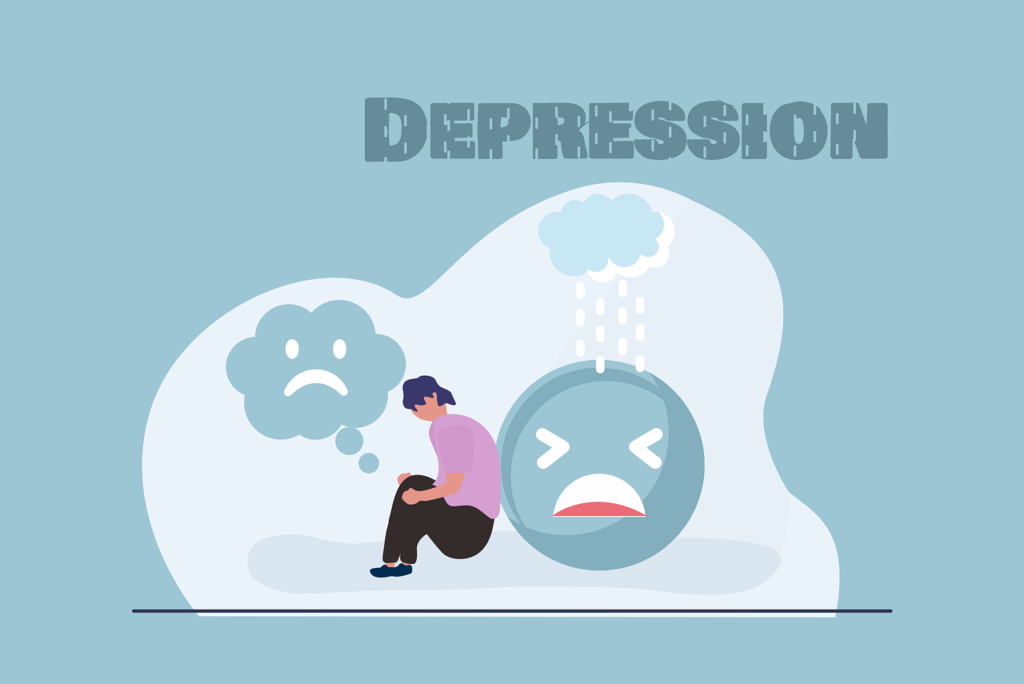
Understanding Depression: A Deeper View
2.1 What really causes depression?
Depression is not a product of one factor. It is all of emotional tension, unworked memories, fear, and disconnection from self. At times, it is born from trauma.
At times, loneliness. At times, from exhaustion that the mind can no longer conceal. When ideas mount without noticing, the nervous system gets clogged and depression starts to develop inwardly like a shadow.
2.2 Symptoms that most people disregard
Most people think of depression as crying or falling apart, but more often than not it masquerades as silence. You might be smiling but be hollow inside. You might be working daily but be unhappy. You might be interacting with people but be isolated.
Sleep is an escape, mornings are burdened, and energy dwindles gradually. When the mind is clouded with emotions, even mundane things seem like a mountain.
2.3 The modern lifestyle trap
Our modern way of life quietly feeds depression. Endless scrolling, comparison, overstimulation, nocturnal behaviors, and physical disconnection from grounding isolate the mind from the body.
The body exists in the present, yet the mind constantly jumps back into past hurt or future worry. Isolation is a major cause of depression increasing over time.
2.4 Why medication alone is not enough
Medications can stabilize chemicals in the short term, but depression is not merely chemical imbalance. Depression is emotional imbalance, energetic imbalance, lifestyle imbalance, and perception imbalance. When the underlying cause is not cured, only relief at the level of symptoms is obtained.
That is why therapy is more effective when used along with breathwork, meditation, grounding techniques, and physical conditioning.
2.5 Mind-body-energy connection
The mind generates thoughts, the body responds to those thoughts, and energy determines how intensely those thoughts impact the nervous system. Depression lowers life-energy (prana). When prana is low, motivation levels decline, hope vanishes, and the mind becomes stuck in the same cycle. This is why ancient spiritual practices such as Vigyan Bhairav Tantra directly intervene to raise internal energy, not merely regulate thinking mechanisms.
Vigyan Bhairav Tantra for Mental Freedom
3.1 What is Vigyan Bhairav Tantra?
Vigyan Bhairav Tantra is an ancient Kashmir Shaivism spiritual teaching. It is not religion or ritual. It is about inner experience. The tantra contains 112 techniques of meditation that teach the mind to move away from steady thoughts into awareness.
Rather than run from feelings, it teaches one to witness them until they melt away. For a person struggling with depression, this is a doorway to inner calm and self-awareness.
3.2 Why this old method works against depression
Depression is fueled by mental chatter — endless self-criticism, thinking, fear, regret, and emotional burden. Vigyan Bhairav Tantra alleviates this by retarding the mental voice repeating these patterns. When the mind quiets down, emotional hurt starts to loosen its hold.
Rather than struggling with the mind, you’re taught to disengage from it. Quiet gets medicated. Awareness becomes stabilizing. Once awareness becomes predominant, depression gradually loosens its hold.
3.3 Breath awareness to heal
Breath is the foundation of most Vigyan Bhairav Tantra techniques. When the breath retards, the nervous system leaves stress mode and enters calm mode. This opens up natural healing. Depression turns the breath shallow and erratic, which deteriorates emotional strength.
But when the breath is deep and aware, mental clarity returns. Awareness in breathing generates emotional space where thoughts no longer become suffocating.
3.4 Inner silence versus repressed feelings
Most people stifle pain believing silence equals control. Suppression isn’t silence, though. Silence is when the mind no longer reacts emotionally. Vigyan Bhairav Tantra assists you in observing thoughts without internalizing them.
Depression becomes burdensome when emotions are repeated over and over, but when they are merely observed, their grip weakens. Inner silence isn’t escapism. It’s emotional mastery.
3.5 Instruction for daily practice (easy for beginners)
Below is a basic beginning practice based on Vigyan Bhairav Tantra:
- Sit comfortably with your back straight.
- Close your eyes and sense the spontaneous movement of your breath.
- Don’t alter it, just watch its movement.
- Sense the cool air coming in and warm air going out.
- Whenever the mind gets thoughts, don’t struggle against them — come back to the breath.
- Keep practicing for 7 to 10 minutes a day.
This is not complex. It does not need a guru, mantras, or rituals. What cures depression is presence. Depression gets weaker when awareness gets stronger.

Leg Press Training Power for Emotional Release
4.1 Reasons why the body carries stress
Depression is thought by most to be solely a mental issue, but much of emotional hurt is carried within the body. When one feels fear, the shoulders tense. When we are feeling sadness, the chest is heavy. When we feel powerless, the lower body gets weak.
The hips and legs are particularly associated with emotional grounding, so when the body is weakened or unstable, the mind also feels insecure. Strength training frees bound-up tension in muscles and restores stability.
4.2 Exercising to minimize depression – the science behind it
Scientific research demonstrates that resistance training enhances endorphins and serotonin, both of which are natural mood stabilizers. When one works large muscle groups such as the legs, one improves blood flow and reduces stress hormones.
Depression tends to make one’s body feel numb and lifeless, but exercising the lower body achieves activation and motivation. It tells the brain that we are strong, not helpless.
4.3 Why leg press is more powerful than other gym workouts
The leg press simulates all the quadriceps, hamstrings, glutes, and calves simultaneously. This massive muscle activation increases nervous system power and emotional grounding.
When you press weight with your legs, your mind feels a sense of grounding — the exact opposite state of being emotionally floated by depression. The more grounded you are in your body, the less control depression has on your mind.
4.4 Leg press technique for beginners
If you’re new to strength training, begin slowly:
- Adjust the seat so your knees are slightly bent.
- Stand with your feet shoulder-width apart.
- Push through your heels, not your toes.
- Do not lock your knees at the top.
- Slowly return to the starting position in control.
This controlled movement teaches patience and discipline, which are critical in healing from depression.
4.5 Tips for safety and recommended reps
Consistency is more important than heavy weights for healing emotions.
- Level Sets Reps Expected Rest
- Beginner 2 10–12 60 sec
- Intermediate 3 12–15 60–90 sec
- Advanced 4 12–20 90 sec
Mind your breath with every rep. Breathe in as you bend your knees, out as you press. This bridges body movement with awareness, generating the same mental clarity you have in meditation.
5 – 7 Powerful Ways to Defeat Depression
This is the core of the blog where spiritual grounding through Vigyan Bhairav Tantra and physical grounding through the leg press machine converge to create emotional strength.
1. Breath Awareness from Vigyan Bhairav Tantra
Your breath is the first exit out of depression. When we breathe shallowly, thoughts get heavier. Vigyan Bhairav Tantra says healing starts the very moment you witness your breath rather than controlling it. Just sitting quietly and observing the breath calms the mind and teaches it to move slowly.
The body starts transforming from stress mode to relaxation mode. With time, this brings emotional clarity. Even on tough days, awareness of breath provides you with an anchor so the mind won’t be swamped with negativity.
2. Grounding the Body by Leg Press Training
Depression weakens the body, making it slow and disconnected. The leg press machine turns this experience around by establishing grounding through physical power. When you press weight with your legs, your nervous system gets a message of strength and stability.
This soothes emotional agitation. The more grounded the body is, the safer the mind feels. And when the mind feels safe, depression gradually loses power. Strength becomes therapy.
3. Replacing Negative Inner Dialogues
Almost all depression is driven by persistent inner criticism:
“I am not enough”, “Nothing will change”, “I can’t do this”.
They are not facts. They are thinking habits.
Substituting these inner conversations with awareness shatters the emotional cycle. Rather than accepting thoughts as true, you can learn to witness them. Vigyan Bhairav Tantra imparts witness-consciousness — the power to observe thoughts without internalizing them.
When you cease identifying with all emotions, healing starts. Your mind no longer attacks you, and inner space returns.
4. Spiritual Stillness Rather Than Overthinking
Overthinking is the oxygen of depression. When the mind never rests, peace never comes. Vigyan Bhairav Tantra never puts the lid on silence. It lets silence manifest spontaneously when the attention goes inward. Stillness is not vacuum. It is freshness. It is rest for the mind.
When stillness grows, emotional suffering no longer accumulates. The mind turns into a space of observation rather than reaction. Once you have tasted stillness, you no longer feel dominated by your thoughts.
5. Developing a Routine for Stability of Emotions
The process of healing depression is not about accomplishing a single grand thing. It is about consistently doing small things. A routine demystifies emotional randomness. Morning meditation and evening leg press is a strong framework:
- One stabilizes the mind
- The other charges the body
This pairing rejuvenates your nervous system on a daily basis. Even when life is weighing you down, routine ensures you don’t break emotionally. Repetition turns short-term relief into long-term resilience.

6. Lifestyle Changes That Accelerate Recovery
Depression gains power when lifestyle routines quietly undermine the body and mind. Slight but significant changes in daily habits can make a significant difference in the way you feel and how quickly you heal.
These are not complex changes — they just return the body to balance so the mind can catch its breath again.
6.1 Enhancing Sleep Rhythm
Sleep is emotional medicine. When one sleeps irregularly or late, depression rises as the brain fails to reset. Sleeping before midnight and waking up with natural light enhances emotional stability. A peaceful nervous system at night results in clearer mental function during the day.
6.2 Food Choices That Support Healing
Food influences mood more than people know. Heavy, greasy, late-night food boosts lethargy and mental cloudiness. Fresh fruits, nuts, seeds, and well-balanced meals provide emotional energy. Water intake also has a significant contribution — dehydration enhances tiredness and makes depression feel heavier than it actually is.
6.3 Digital Detox for Mental Space
Continuous scrolling trains the brain to compare and react. Depression becomes worse when the mind is flooded with other people’s lives, filtered images, and unrealistic success. Even 30 minutes of digital detox daily gives the mind silence to breathe. Less stimulation creates more clarity.
6.4 Morning Sunlight Therapy
Natural light increases serotonin. Exposure to a few minutes of morning sunlight informs your brain “you are awake, alive, and present.” This simple habit decreases drowsiness, stabilizes mood, and minimizes morning weight. Sunlight substitutes emotional numbness for stimulation.
6.5 Light Social Connection
You don’t require a lot of people. You require safe connection. Depression thrives in emotional isolation, not loneliness. Even a brief conversation, a walk together, or an authentic check-in from someone you can trust makes the nervous system feel cared for. The objective is not great socializing — it is gentle connection.
7. Mistakes People Make While Dealing with Depression
Healing slows when the wrong method is adopted. Most people unwittingly dig themselves into deeper depression because they do not realize what really prevents emotional healing. Staying away from these pitfalls can save months of misery.
7.1 Refraining from Seeking Assistance and Staying Silent
One of the most common errors is thinking, “I should do it all myself.” Depression becomes more powerful when it remains secret. Being quiet builds emotional tension. Reaching out — even slightly — dissolves the internal isolation that traps the mind.
7.2 Relying Only on Medication
Medicine stabilizes chemical imbalance, but it cannot reform emotional patterns. Without self-knowledge, breathwork, or grounding work, the core issue remains unchanged. Medicine is aid, not the entire fix. Healing demands lifestyle and mindset engagement.
7.3 Fleeing Through Distractions
Individuals attempt to flee depression through watching constant videos, scrolling back and forth continuously, or keeping the mind occupied constantly. This is disguised emotional avoidance in the form of entertainment. Distraction offers relief for a while, but later on, the weight comes back even heavier.
7.4 Comparing Your Healing Speed
Depression does not recover equally for everybody. Some improve in a month, others take longer. Comparing with others brings pressure and frustration. Healing is not a competition. Progress varies from person to person.
7.5 Expecting Instant Change
Depression develops gradually over a long period of time, so it also heals in the same way. Individuals quit because they anticipate that things must change overnight. True transformation occurs if you persist even on slow days. Slow is still better.

8. Realistic Healing Timeline & Expectations
Healing from depression is not linear. It happens in phases — some days you feel lighter, some days you feel heavy once more. This does not indicate that you are reversing progress. It just indicates the nervous system is gradually re-learning balance.
8.1 Not an Overnight Shift
Depression does not vanish overnight. There is no magic day when everything turns out to be ideal. Recovery is a slow rewiring of habits of emotion. Little changes gradually substitute outdated mental patterns. Hope for rapid relief frequently results in disillusionment.
8.2 Visible Change in 30 Days
If meditation and physical exercise are practiced together, the initial emotional changes typically materialize within 30 days:
- Sleep gets better
- Inner annoyance diminishes
- Thought becomes slower and more conscious
- Morning gloomlessness diminishes
- The mind does not feel reactive
Even though depression is not yet completely gone, the groundwork for healing gets established.
8.3 Consistency Builds Strength
The body adjusts from repetition and the same goes for the mind. The more you stick with breath awareness and leg press training, the more your nervous system adjusts to peace rather than stress. Consistency teaches stability of emotions even when life seems unpredictable.
8.4 Progress Is Not Always Visible
There are times when you think nothing is working, but the mind is restructuring itself quietly from within. Healing is sometimes transparent until it is visible. The time you can feel that strength and emotional sense are coming back, you know the work was never in vain.
8.5 Transformation, Not Quick Fix
Depression doesn’t need a temporary break — it needs to be transformed. Actual healing is when pain no longer dictates your decisions. When awareness trumps helplessness. When the body feels alive once more and the mind feels safe once more. That is why patience is important.
9. A Simple 21-Day Practice Plan
Creating a structured plan helps integrate both Vigyan Bhairav Tantra and leg press training into your daily life. Small, consistent actions over 21 days can shift your mind, body, and energy system to fight depression effectively. Here’s a beginner-friendly schedule.
Day Vigyan Bhairav Practice Leg Press Practice Journal / Reflection
1–3 5 min breath observation 2 sets × 10 reps, light weight Note current mood & energy
4–6 \7 min breath + sensitivity to sensations\2 sets × 12 reps\tMark down any slight changes in feelings
7–9\t10 min mindful breathing\t3 sets × 10 reps\tConsideration of thoughts while exercising
10–12\t10 min watching inner silence\t3 sets × 12 reps\tMark down decrease in negative self-talk
13–15\t12 min breath + inner observation\t3 sets × 15 reps\tMark down depression triggers
16–18\t15 min deep awareness meditation\t4 sets × 12 reps\tMark down gain in energy and concentration
19–21
15–20 min full Vigyan Bhairav practice
4 sets × 15–20 reps
Consider emotional stability and confidence
Tips to be Successful:
- Always pair mindful breathing with physical motion.
- Never rush reps, instead, use controlled, aware movement.
- Miss a day, but get back to it right away — consistency is more important than perfection.
- Monitor small wins; depression recovery is incremental.
Conclusion – A Recap of the Healing Path
Depression can be overwhelming, but it is temporary. Recovery starts when the mind, body, and energy system collaborate. The ancient teachings such as Vigyan Bhairav Tantra instruct you to witness your thoughts, accept internal silence, and rediscover yourself.
Strength training, particularly on the leg press machine, stabilizes the body, loosens tension, and increases natural mood-supporting hormones.
The synergy of mindfulness, bodily grounding, and regular way of life changes forms a strong path to overcome depression. Small daily routines, awareness of breath, and regulated movement lessen emotional weight gradually.
With time, the mind quiets, the body becomes resilient, and your vitality returns. There is no immediate recovery, but patience, consistency, and kindness towards yourself change your life step by step.
Keep in mind that depression is not a failure. Depression is a message that your system needs balance and support. By pledging self-awareness, conscious breathing, grounding, and wholesome routines, you can regain your inner power, recover emotional clarity, and live a resilient and peaceful life.